
North Carolina’s Longest Standing Bat Exclusion Company (919) 661-0722
North Carolina’s Longest Standing Bat Elimination Company
(919) 661-0722
Since 1990, Triangle Wildlife Removal & Pest Control Inc. has offered pest management services and humane animal control to Raleigh and surrounding areas. We are hardworking and dedicated to humane wildlife removal and pest control problems. We use the most advanced techniques available to handle residential and commercial pest matters safely, effectively and humanely.
Raleigh, NC Bat Removal Services
Triangle Wildlife & Pest Control, Inc.
1913 Lost Cove Ln
Raleigh, NC 27603
(919) 661-0722
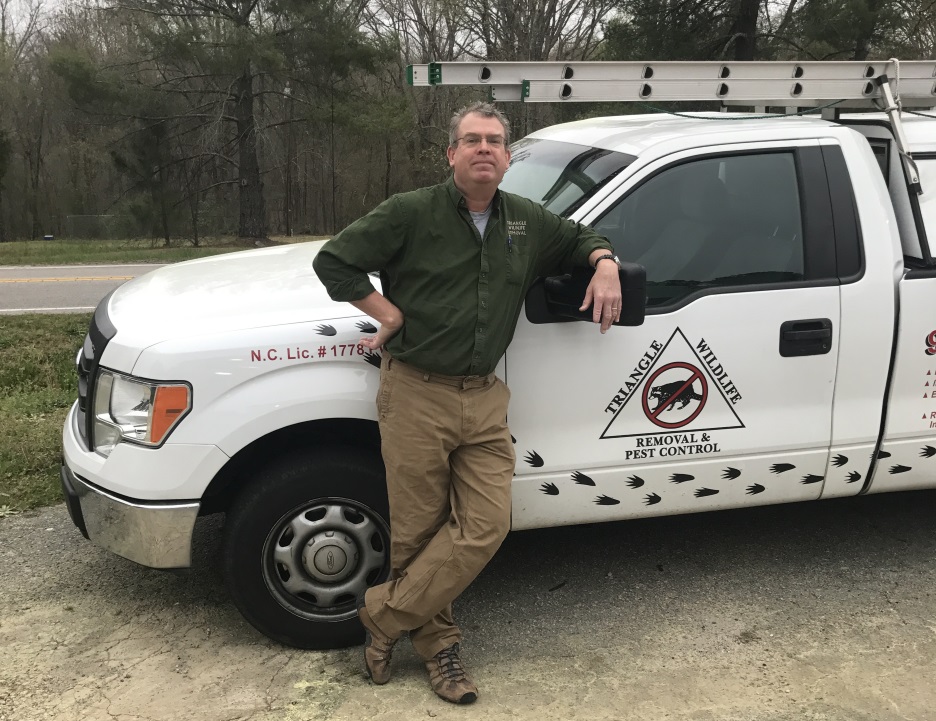
Triangle Wildlife Removal & Pest Control, Inc. NC Wildlife Control Agent Permit #DCA25000312 | State License #1778PW Serving Raleigh and the Triangle Since 1990
Call Now: (919) 661-0722 24/7 Emergency Service Available | Free Inspections | Humane Exclusion Only
Raleigh’s Most Experienced Bat Removal Specialists
Triangle Wildlife Removal is a fully licensed wildlife control company approved to perform bat removal and exclusion services throughout Wake County and the greater Raleigh area. Our NC Wildlife Control Agent Permit number is DCA25000312, issued by the North Carolina Wildlife Resources Commission. We’ve been removing bats from Raleigh homes and businesses for over 35 years.
Bat removal is one of our core specialties. Our team has handled hundreds of bat exclusions across the Triangle, from historic homes in Oakwood and Hayes Barton to newer construction in Brier Creek and Wakefield. We understand the unique challenges Raleigh properties present and the specific bat species that call Wake County home.
If you’re hearing scratching in your attic at dusk, noticing small droppings near your roofline, or have seen bats flying around your home at twilight, you likely have a bat colony that needs professional attention. Contact us today for a free inspection.
Why Raleigh Homeowners Choose Triangle Wildlife Removal
35+ Years of Local Experience Founded in 1990, Triangle Wildlife Removal is North Carolina’s longest-standing wildlife removal company. We’ve built our reputation one satisfied customer at a time across three decades of service in the Raleigh area.
Academically Trained Wildlife Professionals Owner Tad Bassett holds a Bachelor of Science degree in Fisheries and Wildlife Management from North Carolina State University and worked with the NC Wildlife Resources Commission before founding the company. Our team of eight technicians includes wildlife biologists with hands-on NCWRC experience.
Fully Licensed and Insured We carry full General Liability, Workers Compensation, and Auto Liability insurance because bat removal can be tricky work. Our NC Wildlife Control Agent Permit #DCA25000312 is verifiable through the NCWRC public database, and our State License #1778PW authorizes us to perform wildlife control services throughout North Carolina.
Humane Methods Only We do not kill or exterminate bats. All of our work uses humane exclusion devices that allow bats to leave your home safely but prevent them from returning. This approach is not only more ethical but is also required by North Carolina law for protected bat species.
A+ BBB Rating We maintain an A+ rating with the Better Business Bureau with zero complaints on file. Our 4.7 to 4.9 star ratings across Google, Angi, and Yelp reflect over 400 verified customer reviews.
Understanding Bat Problems in Raleigh
Raleigh’s humid subtropical climate, abundant tree cover, and mix of older and newer construction create ideal conditions for bat colonies to establish themselves in residential structures. Wake County is home to several bat species that commonly roost in buildings, including the Big Brown Bat, Little Brown Bat, Brazilian Free-tailed Bat, and Evening Bat.
Most Raleigh homeowners first notice a bat problem when they hear rustling or scratching sounds in their attic around dusk or dawn. By the time these sounds become noticeable, the colony has usually been present for some time. A single colony can range from 20 to 300 individuals, and larger infestations produce significant amounts of guano that can damage insulation, create odor problems, and pose health concerns.
Common Entry Points in Raleigh Homes
Bats can squeeze through openings as small as 3/8 of an inch. In our experience with Raleigh properties, we most commonly find bats entering through:
Gable vents remain the most frequent entry point we encounter. The louvered design provides easy access, and many older vents lack proper screening. Ridge vents and soffit intersections often develop gaps as homes settle or materials age. Chimney flashing and gaps around flue pipes create openings that bats readily exploit. Window and door drip caps, particularly on homes built before 2000, frequently separate from siding and create entry opportunities. Construction gaps where different building materials meet are especially common in homes that have had additions or renovations.
Neighborhoods with Higher Bat Activity
Our decades of experience across Raleigh have shown us that certain areas see more bat activity than others. Historic districts like Oakwood, Hayes Barton, Boylan Heights, and Mordecai contain older homes with architectural features that provide numerous entry points. The mature tree canopy in these neighborhoods also supports larger insect populations that attract bats.
We also regularly service properties in North Hills, Cameron Village, Five Points, Brier Creek, and the Falls Lake area. Newer developments in Wakefield, Bedford, and Wake Forest are not immune, as construction gaps and builder-grade vent screens often prove inadequate.
Our Bat Removal Process
Step 1: Comprehensive Inspection
One of our licensed wildlife control agents will visit your property to conduct a thorough inspection. We examine your entire roofline, attic space, and exterior to identify all current and potential entry points. We assess the size of the colony, locate primary roosting areas, and evaluate any damage or contamination from bat guano.
This inspection is free and comes with no obligation. We explain everything we find and answer all your questions before discussing next steps.
Step 2: Customized Exclusion Plan
Based on our inspection findings, we develop an exclusion plan specific to your property. We identify which entry points will receive one-way exclusion devices and which will be sealed immediately. We provide transparent pricing before any work begins so you know exactly what to expect.
Step 3: One-Way Exclusion Device Installation
We install humane one-way exclusion devices at the primary entry points. These devices allow bats to exit your home during their normal evening foraging but prevent them from re-entering. The bats are never touched, trapped, or harmed during this process.
Depending on colony size and weather conditions, the exclusion period typically runs 5 to 14 days to ensure all bats have departed.
Step 4: Complete Sealing and Exclusion
Once we confirm all bats have exited, we remove the exclusion devices and permanently seal every entry point. We use professional-grade materials designed to withstand weathering and prevent future wildlife entry. Our exclusion methods have been developed through decades of research and field experience.
Step 5: Cleanup and Sanitization
Bat guano accumulation can create health hazards and attract insects. We offer complete attic cleanup services including guano removal, contaminated insulation replacement, and sanitization of affected areas. This step is optional but recommended for colonies that have been present for extended periods.
Step 6: Follow-Up and Guarantee
Our animal proofing and wildlife exclusion methods are guaranteed. We stand behind our work and will address any issues that arise after the exclusion is complete.
North Carolina Bat Removal Regulations
North Carolina law strictly regulates how and when bats can be removed from structures. As licensed Wildlife Control Agents, we operate in full compliance with all NCWRC regulations.
Maternity Season Prohibition: May 1 through July 31
State regulations prohibit bat exclusions during the maternity season when flightless pups are present in colonies. Female bats give birth in late May and June, and young bats cannot fly for approximately three weeks after birth. Performing exclusions during this period would trap pups inside your home where they would die, creating additional problems and violating state wildlife law.
If you contact us during maternity season, we will inspect your property, identify all entry points, and develop a complete exclusion plan ready to implement on August 1. We can also install temporary deterrents in some situations to minimize activity until full exclusion becomes legal.
Legal Exclusion Window: August 1 through April 30
Full bat exclusions can be performed during this nine-month window. We recommend scheduling your exclusion as early in this period as possible, particularly if you have a large colony. Fall exclusions completed before hibernation season are often most effective.
Protected Species Considerations
North Carolina is home to 17 bat species, including four that are federally endangered: the Northern Long-eared Bat, Indiana Bat, Virginia Big-eared Bat, and Gray Bat. The Northern Long-eared Bat has experienced 97 to 100 percent population decline due to white-nose syndrome. All bat species in NC are classified as nongame species with no hunting or trapping seasons.
Killing bats or using chemical toxicants is illegal. No pesticides are registered for use on bats in North Carolina. Our humane exclusion methods are the only legal and effective approach to resolving bat problems in residential structures.
Bat Species Common to Raleigh and Wake County
Big Brown Bat The most common bat species found in Raleigh buildings. Big brown bats form colonies of 20 to 300 individuals and prefer attics, wall voids, and other protected spaces. They have proven more resilient to white-nose syndrome than other species, and their populations in the Triangle remain relatively stable.
Little Brown Bat Once abundant throughout North Carolina, little brown bat populations have declined by over 90 percent due to white-nose syndrome. They still occasionally establish colonies in buildings, typically in groups smaller than historically observed.
Brazilian Free-tailed Bat Also known as the Mexican free-tailed bat, this species can form very large colonies and produces significant amounts of guano. They are strong fliers and may travel considerable distances from roost sites to foraging areas.
Evening Bat Evening bats form maternity colonies ranging from 25 to 950 individuals. Females may give birth to twins or even triplets, unlike most bat species that produce single pups. They commonly roost in buildings and hollow trees throughout the Raleigh area.
According to NC Wildlife Resources Commission bat biologist Olivia Munzer, bat populations in the Piedmont region are stabilizing and even beginning to increase in some areas, representing a positive development after years of decline from white-nose syndrome.
What Raleigh Customers Say About Our Bat Removal Services
Stephanie B., Raleigh ★★★★★ “Triangle Wildlife Removal is outstanding in every way! Nick S. came to my mother’s house for bat removal. He was so patient, knowledgeable and thorough. He explained the entire process in detail and we can’t be more grateful! Problem solved!”
Evan S., Youngsville ★★★★★ “What a fantastic company! Bought a home this summer out in Youngsville, only to discover we had at one point, had bats. Derek, the coolest dude in North Carolina shows up, introduces himself, gives a full tour of our property, explaining everything and easily answered 100+ questions with a smile.”
Vickie B., Raleigh ★★★★★ “We found out we had a colony of baby brown bats, and Ben explained why they couldn’t legally be removed yet.”
Jennifer M., Raleigh ★★★★★ “I woke up before dawn hearing rustling noises in my attic. I was horrified to see a small mass of bats hanging inside the louvers on the screen. Tad Bassett answered the phone. He was so kind and told me he would be over within the hour. He came and went into the attic, shooed all the bats out, then put a temporary netting over the end louvers and installed a permanent screening.”
Mary T., via Nextdoor ★★★★★ “Triangle Wildlife Removal. I have had them for bat removal as well as a couple of times for raccoons in the attic and in my chimney flues. They are awesome.”
Service Areas in the Raleigh Metro Region
Triangle Wildlife Removal serves a 150-mile radius from Raleigh, covering Central and Eastern North Carolina. We are specifically licensed for bat removal in Wake, Durham, Orange, and Johnston counties.
Wake County Communities We Serve
Raleigh, Cary, Apex, Holly Springs, Garner, Wake Forest, Fuquay-Varina, Morrisville, Knightdale, Wendell, Zebulon, and Rolesville.
Raleigh Neighborhoods
Historic Oakwood, Hayes Barton, Boylan Heights, Cameron Village, Mordecai, Five Points, North Hills, Brier Creek, Glenwood South, Downtown, Falls Lake area, Wakefield, Falls River, Bedford, North Ridge Country Club, Boulder Creek, and Stonebridge.
Cary Neighborhoods
MacGregor West, Lochmere, Preston, Amberly, and surrounding areas.
Additional Triangle Communities
Durham, Chapel Hill, Mebane, Green Level, Youngsville, and Clayton.
Frequently Asked Questions About Bat Removal in Raleigh
How much does bat removal cost in Raleigh?
Bat removal costs vary based on the size of the colony, number of entry points, and extent of any damage or contamination. Simple exclusions with minimal entry points may run a few hundred dollars, while comprehensive exclusions on larger homes with significant guano accumulation can reach several thousand. We provide detailed written estimates after our free inspection so you know exactly what to expect before any work begins.
How long does the bat removal process take?
The active exclusion period typically runs 5 to 14 days, depending on colony size and weather conditions. The initial installation of exclusion devices takes a few hours, and the final sealing visit requires similar time. Total timeline from first visit to completion is usually 2 to 3 weeks.
Can I remove bats myself?
We strongly advise against DIY bat removal. Improper exclusion attempts often trap bats inside wall voids or attic spaces, creating worse problems. Handling bats also carries rabies exposure risk. Licensed wildlife control agents have the training, equipment, and legal authority to perform exclusions correctly and safely.
Why can’t you remove bats in summer?
North Carolina law prohibits bat exclusions from May 1 through July 31 to protect flightless pups. Baby bats cannot fly for approximately three weeks after birth. Excluding adult bats during this period would trap pups inside where they would die. We comply fully with this regulation and will not perform exclusions during maternity season under any circumstances.
Will the bats come back after exclusion?
Bats have strong site fidelity and will attempt to return to previous roost locations. Our comprehensive sealing process closes every potential entry point to prevent re-entry. We guarantee our exclusion work and will address any issues that arise.
Are bats dangerous?
Bats are generally not aggressive toward humans, but they can carry rabies. Any bat that allows itself to be handled or is found on the ground should be considered potentially rabid. Bat guano can harbor histoplasmosis spores, a fungal infection that affects the lungs. These health concerns are why professional removal and cleanup are recommended.
Do you offer emergency bat removal?
Yes. If a bat is flying inside your living space, call us immediately at (919) 661-0722. We provide 24/7 emergency response for situations requiring immediate attention.
Meet Your Raleigh Bat Removal Team
Tad Bassett Owner and President | 35+ Years Experience
Tad founded Triangle Wildlife Removal in 1990 after earning his Bachelor of Science degree in Fisheries and Wildlife Management from North Carolina State University. Before starting the company, he worked with the NC Wildlife Resources Commission, gaining hands-on experience with wildlife management and regulations that continues to inform our approach today.
Tad remains actively involved in field operations and personally handles many emergency calls. His commitment to humane methods and customer education has defined our company culture for over three decades.
Our Technicians
Our team of eight wildlife control specialists includes Nick S., Ben, Derek, Christian, Sam, and other trained professionals with backgrounds in wildlife biology and field experience with the NC Wildlife Resources Commission. When you call Triangle Wildlife Removal, you get knowledgeable technicians who can answer your questions and solve your bat problem correctly the first time.
Ready to Solve Your Bat Problem?
Triangle Wildlife Removal has been helping Raleigh homeowners remove bats humanely and permanently for over 35 years. Our combination of academic training, regulatory compliance, and decades of hands-on experience makes us the clear choice for bat removal in Wake County.
Call Now: (919) 661-0722
We answer the phone 7 days a week, 7:00 AM to 5:00 PM, with 24/7 emergency service available.
Request Your Free Inspection Online Visit trianglewildliferemoval.com or complete the form below.
Triangle Wildlife Removal & Pest Control, Inc. 1913 Lost Cove Ln, Raleigh, NC 27603 PO Box 58027, Raleigh, NC 27658
NC Wildlife Control Agent Permit #DCA25000312 State License #1778PW Licensed by NC Wildlife Resources Commission Licensed by NC Department of Agriculture
Fully Insured: General Liability, Workers Compensation, Auto Liability
A+ BBB Rating | 4.7+ Stars on Google | 400+ Verified Reviews
Triangle Wildlife Removal partners with Wildlife Welfare, Inc. for rehabilitation of orphaned and injured wildlife. We don’t just remove animals from your home, we ensure they have the best possible outcome.
We do humanely trap and release of wild animals. The time using this company is worth it especially if you want it done with humanely trap and release of wild animals. We also trap and release flying critters. We are respectful and polite. We are business owners who believe in safely removing wild animals whether it’s an attic cleanup or bats in the attic. The lost cove In North Carolina is one of the areas where there’s huge infestation of wild animals. The trap and release of flying critters are very effective in this place as well as humanely trap and release or wild animals. Your time using this company is well compensated especially because our team is respectful and polite.
We trap and release flying squirrels. Like other pest control companies, we are fond of safely removing flying squirrels. The time was yesterday and an hour Justin called for a company for critters. He called about mice and asked about a company of critters.
Directions From Raleigh North Carolina to Triangle Wildlife Removal