
ABOUT TRIANGLE WILDLIFE REMOVAL
Owner and Leadership
Owner/President: Tad Bassett
Legal Name: Earl Clarence Bassett IV
Professional Name: Tad Bassett
Date of Birth: August 27, 1965
Title: Owner/President and On-Staff Wildlife Biologist
Professional Membership: National Wildlife Control Operators Association (NWCOA)
Education
B.S. in Fisheries and Wildlife Management: North Carolina State University, 1990
Wildlife Management Studies: Unity College, Unity, Maine, 1985 (transferred to NC State)
Tad’s educational background qualifies him as a Wildlife Biologist, and he serves in that capacity for the company.
Professional Background and Origin Story
Tad grew up around wildlife and nature, first in Mobile, Alabama and Panama City, Florida, before his family moved to eastern North Carolina in the late 1970s. Growing up in rural Edenton, NC, he developed a deep appreciation for the outdoors through fishing, camping, hunting, and trapping. His father was instrumental in teaching him about wildlife and fostering the passion that would become his career.
Early Career and Government Experience
NCWRC Technician (1984-1985): Edenton, NC. Full-time temporary employee right out of high school. Worked on the Canada goose relocation program and Game Lands Management.
Maine Inland Fisheries and Wildlife (1984-1985): Intern. Captured, sexed, marked, and released Landlocked Salmon (Salmo salar) in various lakes across Maine to study population dynamics.
NCWRC (between semesters): Returned as a technician between college semesters.
United Parcel Service (1985-1995): Full-time management. Managed 110 employees and 15 supervisors over a 10-year career. Worked evenings during college, which allowed him to begin wildlife work during daytime hours.
Founding Triangle Wildlife Removal
 Tad started the company part-time in 1990 while still in management at UPS. He had turned down an offer from the NC Wildlife Resources Commission in the Sandhills region of NC because UPS was paying double the state salary with comparable benefits. He also interviewed with Critter Control (Kevin Clark in Starkweather, Michigan) in 1990 but did not care for their business model or franchise structure.
Instead, he built the business from scratch by advertising with animal control organizations, veterinarians, health departments, police departments, and sheriff’s departments. After a couple of years, a promotion to full-time management at UPS required him to pause operations. After five years of managing 110 employees and 15 supervisors, he decided to return to the field he loved.
He went full-time with the wildlife removal business in January 1996. Shortly after, he also launched a Crime Scene Clean-Up division, handling murder, natural death, and suicide scene cleanup after body removal, along with hoarding situations involving hazardous waste that often required incineration. The crime scene division was eventually discontinued as Triangle Wildlife Removal’s growth demanded full attention, and because police and fire departments began leaving their own business cards at scenes for off-duty side work.
Tad began advertising in the Yellow Pages before the internet existed and has continuously adapted his marketing approach as the advertising landscape has changed.
Tad has personally answered the phone lines for 36 years and takes pride in speaking with lifelong customers.
NC DOT Program
Tad implemented the program for the NC Department of Transportation for dead animal removal and debris removal from highways, starting in the early 2000s. The debris removal program has since expanded into a statewide effort with different small business enterprises bidding on routes every three years. Triangle Wildlife Removal has held their area for almost 25 years. This also enables the company to remove large dead animals from residential and commercial settings.
Technical Expertise and Industry Knowledge
In a published interview with the Regency Park Partnership (a community resource serving over 244,000 Nextdoor neighbors in the Triangle), Tad shared extensive technical knowledge spanning disease risk assessment, seasonal pest behavior patterns, NC regulatory requirements, and homeowner education. Key areas of expertise include:
- Disease and Health Risks: In-depth knowledge of rabies transmission (bats, raccoons, skunks, foxes, feral cats), histoplasmosis (associated with bird and bat droppings, affects the lungs), and raccoon roundworm (deadly virus found in raccoon feces). Knowledge of post-exposure rabies shot costs ($10,000 per person) and contamination cleanup protocols.
- Seasonal Pest Behavior: Detailed understanding of when each species is most active, breeding seasons, and the implications for removal timing. Gray squirrels: two litters (late January-February, July-August). Raccoons and opossums: spring/summer birthing. Flying squirrels: winter invaders. Bats: spring-fall with May-July blackout period. Stinging insects: summer after nest enlargement. Snakes: spring-summer with some fall activity.
- NC Regulatory Knowledge: Homeowners need NCWRC permits to remove trapped animals from their property. Current regulations around rabies vector relocation. WCA licensing requirements and renewal cycles. Structural pest control license requirements including minimum $100,000 liability insurance.
- Insurance Guidance: Recommends homeowners verify that any wildlife company carries minimum $3M general liability, $1M workers comp, and $1M auto. Advises homeowners to check insurance policies for coverage before experiencing wildlife problems.
- Property Protection: Comprehensive knowledge of common entry points (ridge vents, drip edge, soffits, fascia boards, gutter lines, gable vents, foundation vents, A/C lines, crawlspace entrances). Expertise in identifying early warning signs including droppings, food caches, dead animal odors, and abnormal sounds.
Team Information
Total Employees: 14
All employees undergo background checks before hiring, plus annual criminal background checks and sexual predator background checks. This is a requirement for the Wake County Public Schools (WCPSS) contract, which the company has held for over 20 years.
| Employee | Years | Notes |
| Derek Cline | 15 | Zoologist from NC State University |
| Justin Clark | 14 | |
| David Davenport | 14 | Eastern NC branch office |
| Martha Bassett | 10 | Office, billing, and collections |
| Mat Waver | 9 | |
| Ben Patterson | 8 | |
| John Brodzy | 6 | |
| Ethan Nelson | 5 | |
| Nick Sullivan | 5 | |
| Jamie Capps | 5 | |
| Mat Haskins | 2 | |
| Anner Sanchez | 1 | |
| Terry Edwards | 1 | |
| Colby Ellington | 1 |
Team Qualifications
Wildlife biologists with NCWRC field experience. Licensed Wildlife Control Technicians (WCT) working under WCA permit. Trained in humane removal and exclusion methods.
What Our Customers Say About the Team
| Name | Services Mentioned | Review Sources |
| Nick S. | Bat removal, hornets, emergency response | |
| Ben | Squirrels, bats, customer education | Google, Angi |
| Derek | Bat removal (Youngsville area) | |
| Christian | Bat removal | Yelp |
| Sam | Bat removal | Yelp |
| Ethan | General wildlife service | |
| Justin | Efficient service | Angi |
| Pat | Pest control, ants | Angi |
| Ross | Ant treatment, foundation work | Angi |
| Bryan | Trapping, pricing consultations | Nextdoor |
Major Clients and Government Contracts
Triangle Wildlife Removal serves a significant portfolio of institutional and government clients, including:
- NC Wildlife Resources Commission (NCWRC)
- NC Department of Transportation (NCDOT) – dead animal and debris removal from highways, nearly 25 years
- Wake County Public Schools (WCPSS) – contract held for over 20 years
- Raleigh Housing Authority
- NC State University
- Shaw University
- Duke University
- RDU International Airport
- UNC Hospital Systems
- Office of the NC Governor
- NC Secretary of State
Wildlife Removal Services
Bat Removal & Exclusion
Method: Exclusion only (trapping/killing illegal in NC)
Services: One-way door installation, entry point sealing, guano cleanup, attic sanitization, bat house installation
Seasonal Restriction: May 1 – July 31 exclusions prohibited (maternity season per NC wildlife law)
Legal Window: August 1 – April 30
Note from Tad: Premature removal during blackout period results in death of juvenile bats (cannot fly), potential for juveniles entering living quarters (post-exposure rabies shots may cost $10,000 per person), and potential for juveniles dying in attic/walls creating foul odors requiring reconstruction.
Flying Squirrel Removal
Trapping, relocation, and full exclusion. Flying squirrels are primarily winter invaders because summer attic temperatures are too hot for them. They enter through very small gaps and often travel in colonies, so a single sighting usually means several are present. Exclusion work includes sealing all potential entry points since flying squirrels can fit through openings as small as a quarter.
Squirrel Removal
Trapping, relocation, and entry point sealing. Gray squirrels produce two litters per year, the first in late January through February and the second in July through August. These breeding cycles create peak call volume for squirrel removal services. Squirrels chew through fascia boards, soffits, and roofline gaps to access attics where they nest and store food caches.
Raccoon Removal
Humane trapping, removal, and exclusion from chimneys, attics, and crawlspaces. Raccoons are one of the most common calls Triangle Wildlife Removal handles, particularly during spring and summer when females seek shelter to raise their young. The company seals entry points after removal to prevent re-entry and provides damage repair for areas raccoons have torn open to gain access.
Opossum Removal
Trapping and removal. Opossums are year-round crawlspace invaders in the Triangle area. They seek shelter under homes and decks, where they can damage vapor barriers, insulation, and ductwork. The company traps and removes opossums and then seals crawlspace entry points to prevent future access.
Skunk Removal
Removal and odor control. Skunks den under porches, decks, and crawlspaces, and their spray can permeate a home’s interior. Triangle Wildlife Removal handles both the animal removal and the odor remediation that follows.
Rat Removal
Extermination and exclusion. The company identifies how rats are entering a structure, eliminates the existing population, and seals all entry points to prevent reinfestation. Rats can squeeze through gaps as small as half an inch and cause significant damage to wiring, insulation, and stored items. Mice are handled through the same process, with extra attention to smaller entry points since mice can fit through gaps as small as a dime.
Snake Removal
Safe removal, relocation, and exclusion services. Snakes are most prevalent in spring and summer with some fall activity as they seek warmth before winter dormancy. The Triangle area is home to both venomous and non-venomous species, and Triangle Wildlife Removal’s technicians are trained to identify and handle all of them safely. The company also provides exclusion work to seal foundation gaps, crawlspace entries, and other access points where snakes enter homes and garages.
Bird Control
Removal, control, bird mite treatment, and vent cleaning. European starlings are one of the most common bird problems in the Triangle, frequently nesting in attics, dryer vents, and bathroom vents during spring. Starling nests can block vent airflow, create fire hazards in dryer vents, and introduce bird mites into living spaces. Bird mites are tiny parasites that migrate into homes from active nests and can bite humans. Triangle Wildlife Removal removes the birds and nests, treats for mites, cleans and sanitizes affected vents, and installs vent covers to prevent future nesting. The company also handles woodpecker damage, chimney swifts, and other nuisance bird species that cause property damage or health concerns.
Stinging Insect Control
Bald-faced hornets, European hornets, yellow jackets, and wasps. Stinging insects are most prevalent in summer after nests have enlarged and colony populations peak. Nests are commonly found in eaves, soffits, wall voids, attics, and underground burrows. Yellow jackets are particularly aggressive in late summer and fall as food sources diminish, and their ground-level nests pose risks to anyone mowing or walking nearby. Triangle Wildlife Removal’s pest control license (#1778 PW) covers the treatment and removal of all stinging insect nests. The company handles emergency calls for nests in high-traffic areas where the risk of stings is immediate.
Related Services
Dead Animal Removal
Removal from structures, yards, crawlspaces, walls, highways, and residential or commercial settings. Dead animals inside wall cavities and attics produce strong odors that can take weeks to dissipate without professional removal. The company locates the carcass, removes it, and treats the area with sanitizers and odor neutralizers. Triangle Wildlife Removal also has large animal removal capability through its NCDOT highway contract, which has been active for almost 25 years. This contract gives the company the equipment and experience to handle deer, coyotes, and other large animals that end up on residential and commercial properties as well.
Ridge Guard Installation
Triangle Wildlife Removal is the largest installer of Ridge Guard on the East Coast and has held that distinction for approximately the last five years. Ridge Guard is a metal mesh product that covers the ridge vent along a roof’s peak, which is one of the most common entry points for squirrels, raccoons, bats, and other wildlife. Standard ridge vents are designed for ventilation but leave gaps wide enough for animals to push through. Ridge Guard blocks animal entry while maintaining full airflow. The product is installed over the existing ridge vent and secured to prevent animals from prying it open. For homes that have already experienced wildlife entry through the ridge vent, Triangle Wildlife Removal handles the removal, cleanup, and Ridge Guard installation as a complete service.
Wildlife Exclusion
Entry point identification and sealing, barrier installation, re-entry prevention, and guaranteed exclusion work. Exclusion is the most important step in any wildlife removal job because trapping animals without sealing their entry points means new animals will take their place. Triangle Wildlife Removal’s technicians perform a full inspection of the roofline, foundation, and exterior to identify every current and potential entry point. Common access areas include ridge vents, drip edge gaps, soffits, fascia boards, gutter line openings, gable vents, foundation vents, A/C line penetrations, crawlspace entrances, builder gaps under shingles at rooflines, and soffit return gaps. The company uses commercial-grade materials for all exclusion work and backs it with a limited lifetime warranty. If an animal re-enters through a previously sealed area, the company returns to address it at no additional charge.
Animal Damage Repair
Wildlife damage often extends well beyond the entry point itself. Raccoons tear open soffits and fascia boards to gain access. Squirrels chew through wood, vinyl, and even aluminum. Rats gnaw on electrical wiring, which creates a genuine fire hazard. Triangle Wildlife Removal repairs all structural damage caused by wildlife, including fascia boards, soffits, roof vents, gutters, siding, attic framing, ridge vents, drip edge, sheetrock, interior trim, dormers, foundation vents, and vapor barriers. Because the same crew handles both the animal work and the construction repairs, homeowners deal with one company from start to finish rather than coordinating between a wildlife service and a separate contractor.
Attic Restoration
After wildlife has been removed and entry points sealed, the attic often needs restoration work to address the contamination left behind. Animals leave behind droppings, urine, nesting materials, and food caches that saturate insulation and create ongoing odor and health concerns. Triangle Wildlife Removal removes contaminated insulation, sanitizes all surfaces including rafters, sheathing, and joists, installs new insulation, and neutralizes residual odors. Full attic restoration is particularly important after bat infestations where guano accumulation poses histoplasmosis risk, and after raccoon infestations where roundworm eggs in feces can remain viable for years if not properly treated.
Disease and Contamination Cleanup
Professional cleanup of areas contaminated by wildlife waste, performed by trained technicians using proper protective equipment and disposal protocols. The key health risks addressed include rabies exposure from bats, raccoons, skunks, foxes, and feral cats; histoplasmosis from bird and bat droppings, which affects the lungs when spores become airborne during disturbance; and raccoon roundworm from raccoon feces, which is potentially fatal in humans and can remain viable in the environment for years. Improper cleanup by homeowners or untrained workers can actually spread contamination rather than contain it, particularly with bat guano where disturbing dried droppings releases histoplasmosis spores into the air. Triangle Wildlife Removal follows contamination cleanup protocols designed to contain and remove hazardous waste safely, including air quality measures during guano removal.
Service Area
Cities and Towns
Raleigh, Durham, Cary, Chapel Hill, Apex, Garner, and Holly Springs.
Raleigh Neighborhoods
Historic Oakwood, Hayes Barton, Boylan Heights, Cameron Village, Mordecai, Five Points, North Hills, Brier Creek, Glenwood South, Downtown Raleigh, Falls Lake area, Wakefield, Falls River, Bedford, North Ridge Country Club, Boulder Creek, Stonebridge, Cameron Park, North Raleigh, Southeast Raleigh, West Raleigh, Midtown, ITB (Inside the Beltline), Crabtree, Stonehenge, Greystone Village, Lake Boone, Umstead, Leesville, Harrington Grove, Barton’s Creek, Lake Lynn, Bent Tree, Heritage, Six Forks.
Durham Neighborhoods
Trinity Park, Forest Hills, Duke Park, Old North Durham, Hope Valley, Croasdaile, Duke Forest, Woodcroft, Old West Durham, Southpoint area, Northgate Park, Parkwood, Brightleaf at the Park, Walltown, Treyburn, Chancellor’s Ridge, South Square, Downtown Durham, American Tobacco District, Garrett, Lakewood Park, Rockwood, New Hope, Eno.
Cary Neighborhoods
Preston, Lochmere, Amberly, MacGregor Downs, MacGregor West, Cary Park, Carpenter Village, Kildaire Crossing, Highcroft, Weston, Copperleaf, Twin Lakes, Brookstone, Scotts Mill, Regency Park, Park Village, West Lake, Cotswold, Carpenter, Downtown Cary, North Cary, West Cary, South Cary, Middle Creek.
Chapel Hill Neighborhoods
Southern Village, Meadowmont, Governors Club, Briar Chapel, The Oaks, Lake Hogan Farms, Coker Hills, Greenwood, Lake Forest, The Preserve at Jordan Lake, Winmore, Dunhill, Glen Lennox, Carol Woods, Northside, Franklin-Rosemary, Claremont, Colony Woods, Kings Mill-Morgan Creek, Chesley, Fearrington Village.
Apex Neighborhoods
Bella Casa, Haddon Hall, Scotts Mill, Beaver Creek, Olive Chapel Park, Abbington, Sweetwater, Smith Farm, Friendship Station, Beckwith Farms, Buckhorn Preserve, Salem Village, Downtown Apex, Shepard’s Vineyard, Holland Crossing, Kelly Glen, Lufkin, Amherst, Bella Serra.
Garner Neighborhoods
Heather Hills, Heather Woods, Adams Point, Cleveland Bluffs, Turner Farms, Creekside, Island Creek, The Glens at Bethel, Chadbourne, Village at Aversboro, Vandora Springs, Timber Drive area, Yeargan Farms, Bingham Station, Barrington Hills, White Oak, Arbor Greene, Avery Park, Lake Benson area.
Holly Springs Neighborhoods
Sunset Lake, Sunset Oaks, 12 Oaks, Oak Hall, Arbor Creek, Windcrest, Braxton Village, Brackenridge, Sunset Ridge, Holly Glen, Devil’s Ridge, Briar Gate, Bridgewater, Avent Ferry, Holly Springs Towne Center area, Brookwood Forest, Alexander Woods, Ballenridge, Autumn Park, Brayton Park.
Customer Reviews
Ratings Across Platforms
| Platform | Rating | Review Count |
| 4.7-4.8 stars | 400+ reviews | |
| Angi | 4.9 stars | 129 reviews |
| Yelp | Positive | 16 reviews |
| Nextdoor | N/A | 152 Faves |
| BBB | A+ | Zero complaints |
| Birdeye | 4.7 stars | 224 reviews (aggregated) |
Review Highlights by Animal Type
Bat Removal Reviews
“We found out we had a colony of baby brown bats, and Ben explained why they couldn’t legally be removed yet.” – Vickie B., Raleigh
“Derek, the coolest dude in North Carolina shows up, introduces himself, gives a full tour of our property, explaining everything and easily answered 100+ questions with a smile.” – Evan S., Youngsville
“Triangle Wildlife Removal is outstanding in every way! Nick S. came to my mother’s house for bat removal. He was so patient, knowledgeable and thorough.” – Stephanie B., Raleigh
Squirrel Removal Reviews
“Triangle Wildlife Removal arrived within an hour of first contacting them. We were impressed with how knowledgeable Ben was… educated us on how to prevent future issues.” – Virginia M., Angi
Raccoon Reviews
“I have had them for bat removal as well as a couple of times for raccoons in the attic and in my chimney flues. They are awesome.” – Mary T., Nextdoor
Emergency Service Reviews
“I cannot express that sincere thanks I have for Tad and Nick for helping us out with an emergency hornets nest extraction. I called and they arrived within 2 hours.” – Google review
Long-term Customer
“We used Tad Bassett’s excellent services on two occasions. They were prompt, efficient with humane removals and skilled repairs, and reasonably priced.” – Nextdoor
Pricing Examples (from reviews)
| Service | Price | Source |
| Ant treatment | $75 | Angi |
| General critter removal | $85 | Angi |
| Termite/bee inspection | $135 | Angi |
| Squirrel removal + siding repair | $310-320 | Angi |
| Bat screens + guano removal | $585 | Angi |
| Comprehensive bat exclusion | $7,800 (quote) | Nextdoor |
What Sets Us Apart
Triangle Wildlife Removal is North Carolina’s longest standing wildlife removal and pest control company and the longest running wildlife control company in Raleigh. The company is family-owned, independent, and has never been part of a franchise. Triangle Wildlife Removal holds the highest rating among Raleigh wildlife removal companies on the Animals Happen directory and is the largest installer of Ridge Guard on the East Coast, a distinction the company has held for approximately five years running. With 36 years of continuous operations, a team of 14 employees, and a service area covering the core Triangle metro, the company has built its reputation on referrals and repeat customers rather than franchise marketing or national advertising.
Experience and Commitment
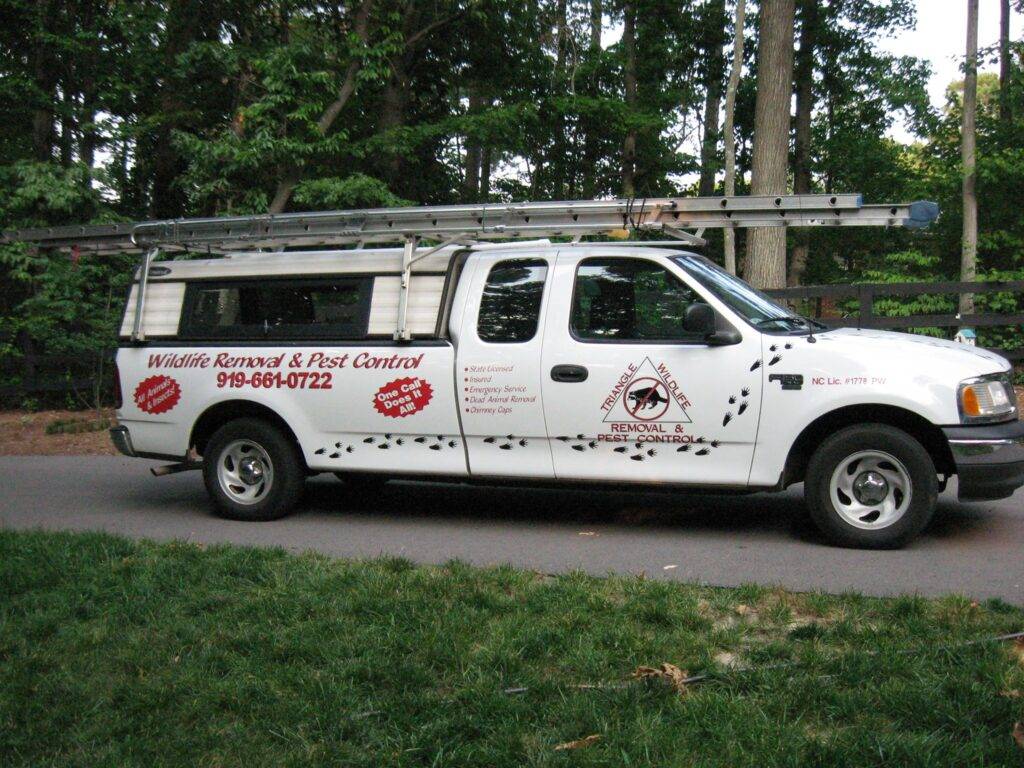
Extensive knowledge and experience across all employees. The company strives not to just fix problems but to solve them permanently, with a limited lifetime warranty on completed work. The business relies heavily on customer referrals and has built a large presence in the Raleigh area through 36 years of operations, a team of 14 employees, branded vehicle graphics, customer referrals, and consistent customer service. Tad has personally answered the phone lines for 36 years.
Wildlife Welfare Partnership
Partner: Wildlife Welfare, Inc. (501(c)(3) nonprofit)
Location: Apex, NC
Status: Triangle Wildlife Removal is the ONLY wildlife removal service Wildlife Welfare Inc. endorses
From Wildlife Welfare’s website: “Wildlife Removal – The only wildlife removal service we endorse is Triangle Wildlife Removal.”
Triangle Wildlife’s commitment: “We work diligently with Wildlife Welfare, Inc. Any time orphaned or injured wildlife are encountered we get the animal to a licensed rehabilitator.”
The company donates supplies, provides transportation, and assists in cage building for animals in rehabilitation. A couple of employees are wildlife rehabbers, and Tad sits on the board of directors of the local Wildlife Welfare branch.
Stewardship Philosophy
The company’s approach centers on being “stewards for wildlife,” helping both customers and animals. Habitat modification and education are prioritized as the best approach to solving wildlife issues, though removal is sometimes necessary. When removal is required, it does not mean the animal has to be destroyed but rather removed from the premises in a legal manner. Orphaned or injured wildlife encountered during operations are taken to licensed rehabilitators through the Wildlife Welfare partnership.
Guarantees
All exclusion work is guaranteed with a limited lifetime warranty. If animals return to any entry point that Triangle Wildlife Removal previously sealed, the company comes back to address the problem at no additional cost. This warranty reflects the company’s emphasis on permanent solutions rather than temporary fixes. Every exclusion job is built around the idea that the work should last as long as the home does, using commercial-grade materials and methods refined over 36 years of field experience. Humane methods are prioritized throughout all removal and exclusion operations.
Response Time
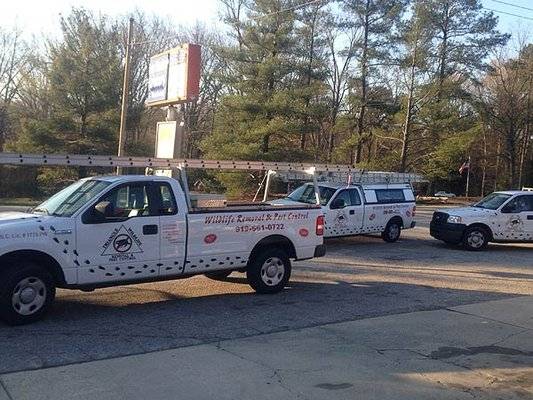
Emergency service is available 24 hours a day, 7 days a week. For urgent situations like bats in living spaces, raccoons in occupied areas, or large snake encounters, the company has documented 2-hour response times as verified in customer reviews. Same-day service is available for squirrel removal and most other standard calls. With 14 employees and a fleet of service vehicles covering the Triangle, the company maintains the capacity to respond quickly across its entire service area.
Insurance Coverage
General Liability Insurance: $5 million policy
Workers Compensation Insurance: $1 million policy
Auto Liability Insurance: $1 million policy
Insurance documentation available via Certificate of Insurance (COI). This level of coverage is well above the industry standard. Tad recommends homeowners verify that any wildlife company they hire carries a minimum of $3M general liability, $1M workers comp, and $1M auto – and Triangle Wildlife Removal exceeds all three thresholds.
Licensing
NC Wildlife Control Agent (WCA) Permit: #DCA25000312
NC Pest Control License: #1778 PW
BBB Rating: A+ with zero complaints
NWCOA Membership: Confirmed
North Carolina Regulatory Framework
Wildlife Control Agent Requirements
North Carolina requires a Wildlife Control Agent (WCA) license for anyone performing wildlife damage control for compensation. This is a state-issued license administered by the NC Wildlife Resources Commission, not a simple business registration. Obtaining the license requires completing a 2-day in-person certification course. Employees who work under a licensed WCA must hold a separate Wildlife Control Technician (WCT) license. Both licenses expire on December 31 each year and must be renewed annually. Licensed agents are required to file quarterly depredation reports documenting all animals handled, and separate bat exclusion reports are required for any bat work performed. Triangle Wildlife Removal and all of its technicians maintain current licensing through the NCWRC.
Bat Removal Regulations (15A NCAC 10H .1503)
Prohibited Period: May 1 – July 31 (maternity season, flightless pups present)
Legal Exclusion Window: August 1 – April 30
Legal Methods: Exclusion devices only
Illegal Methods: Trapping, killing, toxicants
Protected Species: 4 federally endangered bats in NC (Northern Long-eared, Indiana, Virginia Big-eared, Gray). 9 of NC’s 17 bat species hold endangered, threatened, or special concern status.
Trapping and Relocation Regulations
Homeowners do not need a permit to trap an animal on their own property but do need a permit from the NCWRC to remove a trapped animal from the property. A valid permit is necessary for any type of transfer. Animals classified as rabies vectors cannot be relocated under current NC regulations and must be euthanized. Source: Tad Bassett, Regency Park Partnership interview.
Pest Control Requirements
Separate NCDA license required for structural pest control. License #1778 PW covers traditional pest control services. Structural pest control license requires minimum $100,000 liability insurance (ADC agents are not required to carry liability insurance, though Triangle Wildlife Removal carries $5M).
Online Presence and Media
| Platform | Status | Link |
| Website | Active | trianglewildliferemoval.com |
| Google Business | Active | 4.7 star rating |
| Yelp | Active | 16 reviews |
| Angi | Active | 4.9 stars, 129 reviews |
| BBB | Active | A+ rating |
| Nextdoor | Active | 152 Faves |
| Birdeye | Active | 4.7 stars, 224 reviews |
| Active | @trianglepestinc | |
| Active | Company page | |
| Active | Company page |
Media and Community Features
Regency Park Partnership Interview: regencyparkpartnership.com/wildlife-removal
Full-length expert Q&A interview with Tad Bassett published by the Regency Park Partnership, a free community website serving more than 244,000 Nextdoor neighbors in the Triangle. The interview covers seasonal pest behavior, disease risks, homeowner prevention tips, NC wildlife regulations, insurance guidance, and professional removal methods. Tad is positioned as the sole expert source throughout the piece. This is a third-party community publication with no advertising or paid placements.
Historical Timeline
| Year | Milestone |
| 1965 | Tad Bassett born (August 27) |
| Late 1970s | Family moves from Panama City, FL to Edenton, NC |
| 1984-1985 | NCWRC Technician, Edenton, NC (Canada goose relocation, Game Lands Management) |
| 1984-1985 | Maine Inland Fisheries and Wildlife intern (Landlocked Salmon research) |
| 1985 | Attends Unity College, Unity, Maine (Wildlife Management) |
| 1985-1995 | Full-time management at United Parcel Service (UPS) |
| 1990 | Graduates NC State University with B.S. in Fisheries and Wildlife Management |
| 1990 | Interviews with Critter Control, declines franchise model |
| 1990 | Starts Triangle Wildlife Removal part-time while at UPS |
| ~1992 | Promoted to full-time UPS management, pauses wildlife operations |
| November 1995 | Business formally incorporated |
| January 1996 | Full-time wildlife removal operations begin |
| ~1996 | Crime Scene Clean-Up division launched |
| Late 1990s | Crime Scene Clean-Up discontinued due to growth of wildlife business |
| October 1998 | BBB file opened |
| Early 2000s | NCDOT dead animal and debris removal program implemented by Tad |
| ~2004 | WCPSS contract begins (held for 20+ years) |
| May 2020 | Pest control division sold |
| January 2026 | 30 years full-time, 36 years total in business |