
Why Bats Are Important for Mosquito Control in Raleigh, NC
Bats play a crucial role in mosquito control in Raleigh, NC. With their ability to consume large quantities of insects, including mosquitoes, bats help to keep the mosquito population in check. A single bat can eat up to 1,000 mosquitoes in just one hour. Considering...Do Bats Migrate? Understanding Bat Behavior in Raleigh, NC
Bats are fascinating creatures that have long intrigued scientists and nature enthusiasts alike. One common question that arises when studying bats is whether or not they migrate. In the case of Raleigh, NC, it is important to understand the behavior of bats in order...Health Risks Associated with Bat Guano
Bat guano, the excrement of bats, may seem harmless, but it poses significant health risks to humans. One of the most concerning dangers associated with bat guano is histoplasmosis, a serious respiratory disease caused by the fungus Histoplasma capsulatum. This fungus...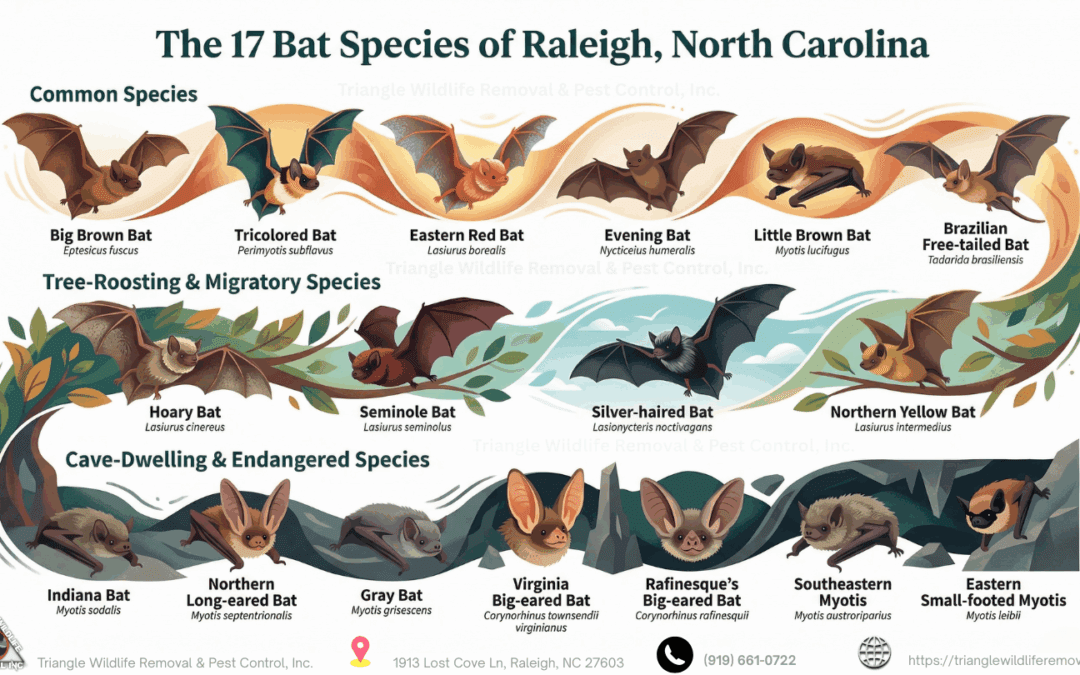
Bat Species Native to Raleigh, NC
Bat Species Native to Raleigh, NC North Carolina is home to 17 species of bats, making it one of the most diverse bat habitats in the eastern United States. From the tiny Tricolored Bat with its 8-inch wingspan to the impressive Hoary Bat spanning up to 16 inches,...
Benefits of Bat Colonies for Raleigh, NC’s Ecosystem
Bat colonies in Raleigh, NC provide numerous benefits to the local ecosystem. One of the most significant advantages is their role in controlling insect populations. Bats are voracious insect predators, and a single bat can consume hundreds of mosquitoes and other...Rabies Advisory Issued For Raleigh Residents
Click Image For Article