

Call Now For Help With Rats
Rats and Mice in North Carolina: Species, Behavior, and Structural Infestations
Four rodent species account for the vast majority of rat and mouse infestations in North Carolina homes and buildings: the Norway rat (Rattus norvegicus), the roof rat (Rattus rattus), the house mouse (Mus musculus), and the deer mouse (Peromyscus maniculatus). None of them are native to North America. The Norway rat, roof rat, and house mouse all arrived from Europe with early settlers. They are commensal rodents, meaning they live in close association with humans and depend on human activity for food, water, and shelter.
The house mouse is the most common rodent pest in residential settings across the state, followed by the Norway rat and the roof rat. Deer mice are primarily outdoor animals but enter buildings in rural and suburban areas, particularly during colder months. All four species are prolific breeders, nocturnal, and capable of causing structural damage, contaminating food stores, and transmitting diseases to humans. NC State Extension identifies the Norway rat and roof rat as the two primary structure-invading rat species across the state.
Biology and Physical Characteristics
Understanding which species you are dealing with determines where to look, what entry points to address, and how the infestation is behaving. The four species differ enough in size, appearance, and habits that identification is usually straightforward once you know what to look for.
| Species | Body Length | Weight | Appearance | Preferred Location |
|---|---|---|---|---|
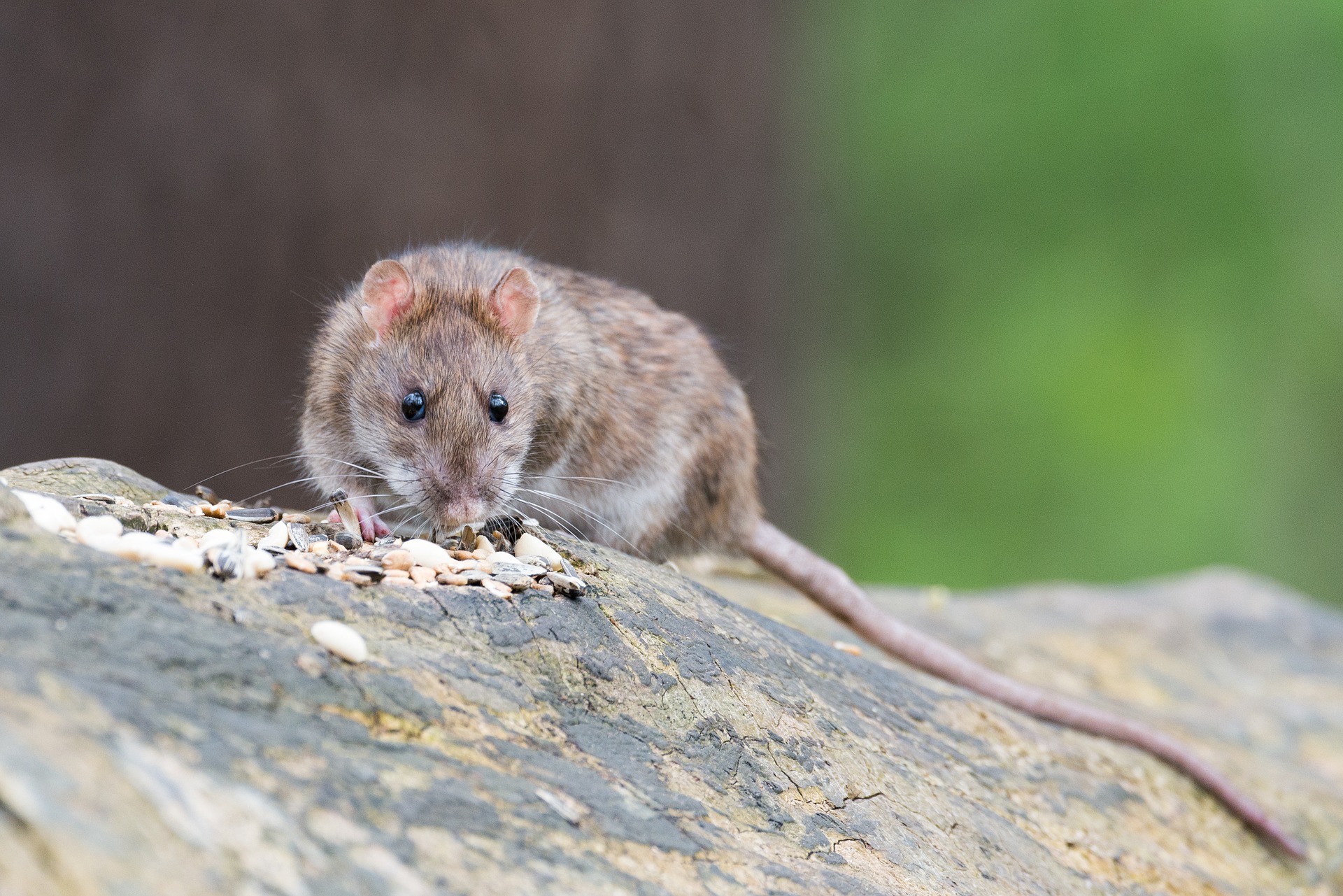
| Norway Rat | 7-10 inches + 6-8 inch tail | 12-16 oz | Stocky build, brown-gray fur, small ears, blunt snout, tail shorter than body | Basements, crawlspaces, ground level, burrows along foundations |
| Roof Rat | 6-8 inches + tail often longer than body | 5-9 oz | Slender build, dark brown to black fur, large ears and eyes, pointed snout | Attics, wall voids, upper floors, rooflines, trees |
| House Mouse | 2.5-4 inches + 3-4 inch tail | 0.5-1 oz | Small, light brown to gray, large ears relative to head, pointed snout | Wall voids, cabinets, pantries, insulation, any level of the structure |
| Deer Mouse | 3-4 inches + 2-4 inch tail | 0.5-1 oz | Brown upper body, white belly and feet, bicolored tail (dark above, white below) | Sheds, garages, cabins, storage areas, rural structures |
The Norway rat is the largest of the four, with a heavy, compact body built for burrowing. Its tail is shorter than its body length – a quick identification point that separates it from the roof rat, whose tail typically exceeds its body length. Norway rats have relatively small eyes and ears compared to their head, and their blunt snout gives them a distinctly different profile from the sharper-featured roof rat.
The roof rat is the more agile of the two rat species. Its slender frame, large eyes and ears, and long tail are adaptations for climbing and traveling along elevated surfaces – wires, tree branches, rooflines, and rafters. In North Carolina, roof rats are more common in coastal areas and urban centers but are found across the Piedmont as well.
House mice are dramatically smaller than either rat species. An adult house mouse weighs less than an ounce. Their small size is what makes them so difficult to exclude from buildings – they can fit through a gap as narrow as a quarter inch, which is roughly the diameter of a pencil. Deer mice are similar in size to house mice but easily distinguished by their sharply bicolored fur: brown on top, white on the belly, with white feet and a tail that is dark above and white below.
All four species have continuously growing incisor teeth. The word “rodent” comes from the Latin rodere, meaning “to gnaw.” That gnawing is not optional. Their incisors grow roughly five inches per year, and constant gnawing on hard surfaces is how they keep the teeth worn to a functional length. This biological necessity is the root cause of the structural damage rodents inflict on buildings.
Reproduction
Rodent reproductive rates are staggering, and this is the primary reason small problems become large ones quickly.
Norway rats reach sexual maturity at about three months of age. A female produces 4 to 6 litters per year, with 6 to 12 pups per litter. Gestation lasts 21 to 23 days. Pups are weaned by three to four weeks. Roof rats reproduce at a similar pace, with slightly smaller average litter sizes of 5 to 8 pups.
House mice are even more prolific relative to their size. Females reach sexual maturity at 6 to 10 weeks and produce 5 to 10 litters per year, averaging 5 to 6 pups per litter. A single pair of mice and their descendants can produce thousands of offspring within a year under favorable conditions. Deer mice breed similarly, though they are more seasonal in the wild, with peak breeding in spring and fall.
The math makes the case for early intervention. A pair of Norway rats that enters a crawlspace in October can produce 30 to 70 offspring by the following spring. Each of those females begins breeding at three months. By the time most homeowners realize they have a problem, they have a population.
Seasonal Behavior and Habitat
Rodent pressure on buildings intensifies in the fall and winter months. As temperatures drop and natural food sources decline, rats and mice seek the warmth, shelter, and food availability that human structures provide. This seasonal migration into buildings is the primary driver of residential infestations in North Carolina.
Norway rats are ground dwellers. In outdoor settings, they dig burrow systems along building foundations, under concrete slabs, beneath woodpiles, and in overgrown vegetation. Their burrows typically have multiple entrances and can extend several feet underground. When they move into a structure, they favor the lower levels – basements, crawlspaces, and ground-floor wall voids. They are strong swimmers and commonly travel through sewer lines, which is why they are sometimes called sewer rats.
Roof rats behave differently. They are climbers, traveling along tree branches, utility lines, fences, and vines to reach upper levels of buildings. Inside structures, they nest in attics, wall voids on upper floors, and above drop ceilings. In North Carolina, roof rats were historically more common in coastal areas where they arrived at port cities, but their range has expanded inland through the Piedmont. Trees, particularly fruit-bearing species, that overhang or contact a building’s roofline are a primary pathway for roof rat entry.
House mice are habitat generalists. They nest at any level of a structure, in any void or enclosed space that offers warmth and proximity to food. They build nests from shredded paper, fabric, insulation, and other soft materials, and unlike rats, they can survive with little to no free water, drawing the moisture they need from the food they eat. This makes them less dependent on water sources and allows them to thrive in dry areas of a building where rats would not.
Both rat species are neophobic – they fear new objects in their environment. A new trap or bait station placed along a Norway rat’s travel route may be avoided for five days or more before the animal investigates it. House mice are the opposite. They are curious and will investigate new objects quickly, sometimes within hours.
Why Rats and Mice Become a Nuisance
Rodent damage to buildings falls into three categories: structural, electrical, and biological.
Structural damage. Gnawing is constant and indiscriminate. Rats and mice chew through wood framing, drywall, plastic plumbing, aluminum flashing, and vinyl siding. Norway rats burrow under foundations and concrete slabs, which can undermine structural integrity over time. Roof rats gnaw through soffit panels, fascia boards, and roof sheathing to create and enlarge entry points. Inside the building, both species chew through food packaging, storage containers, and insulation.
Electrical damage. Rodents gnaw on electrical wiring. They chew through the insulation that covers wires, leaving bare conductors exposed inside walls, attics, and crawlspaces. Bare wires in contact with wood framing or insulation create a fire hazard. The National Fire Protection Association and insurance industry data have linked rodent damage to wiring as a contributing factor in residential structure fires, though exact percentages are disputed. What is not disputed is that exposed wiring inside a wall void is a legitimate safety concern.
Biological contamination. A single rat produces 30 to 50 droppings per day. Multiply that by the number of animals in an active infestation and the contamination accumulates rapidly. Droppings, urine, nesting material, and food debris collect in insulation, on stored items, in ductwork, and on surfaces throughout the infested area. The urine-soaked insulation and nesting material produce a persistent musty odor that can permeate the living space. Rat urine also leaves grease-like rub marks along frequently traveled surfaces – walls, pipes, and beams develop a visible dark residue from the oils in the animal’s fur.
Beyond the physical damage, the presence of rats and mice attracts secondary pests. Fleas, mites, ticks, and beetles associated with rodent nests will remain in the structure after the rodents are removed. Stored food contaminated with rodent feces or urine must be discarded.
Health Risks Associated with Rats and Mice
The CDC lists over 35 diseases that can be transmitted from rodents to humans, either directly through contact with droppings, urine, saliva, or bites, or indirectly through fleas, ticks, and mites that feed on infected rodents. The diseases most relevant to residential infestations in North Carolina include:
Leptospirosis. Caused by Leptospira bacteria found in rodent urine. Humans contract the infection through contact with contaminated water, soil, or surfaces, particularly through broken skin or mucous membranes. Symptoms include fever, headache, muscle pain, and in severe cases, kidney and liver failure. Norway rats are the primary reservoir for leptospirosis in urban and suburban environments.
Salmonellosis. Rodent droppings and urine can contaminate food preparation surfaces, stored food, and utensils with Salmonella bacteria. This is a particular concern in kitchens and pantries where mice forage across countertops and inside cabinets at night, leaving fecal pellets and urine trails on surfaces that will be used for food preparation the next morning.
Rat-bite fever. Caused by Streptobacillus moniliformis or Spirillum minus, bacteria found in the mouths and nasal passages of rats. Transmission occurs through bites, scratches, or ingestion of food or water contaminated with infected rat secretions. Symptoms include fever, rash, and joint pain, and can progress to pneumonia or meningitis if untreated.
Hantavirus. The CDC identifies the deer mouse as the primary carrier of Sin Nombre virus, the hantavirus strain responsible for hantavirus pulmonary syndrome (HPS) in the United States. Transmission occurs through inhalation of aerosolized particles from deer mouse droppings, urine, or nesting material. HPS is rare but carries a fatality rate above 30%. The primary risk scenario is disturbing accumulated deer mouse droppings in an enclosed space – a shed, cabin, storage building, or attic – without respiratory protection.
Lymphocytic choriomeningitis (LCM). A viral infection carried by house mice. Transmission occurs through contact with mouse urine, droppings, saliva, or nesting material. Most infections are mild, but LCM can cause meningitis and poses a particular risk to pregnant women, where infection can result in birth defects or miscarriage.
Electrical Fires: The Hidden Risk of Rodent Infestations
Gnawing on electrical wiring deserves its own focus because it is the single most dangerous consequence of a rodent infestation that homeowners cannot see. The damage happens inside walls, above ceilings, and below floors – places where you will not notice chewed insulation on a wire until something fails or, in the worst case, ignites.
Rodents gnaw on wiring for the same reason they gnaw on everything else: they have to. Their incisors do not stop growing, and hard materials like the thermoplastic insulation on electrical wiring serve as effective filing surfaces. The problem is what that gnawing leaves behind. When the insulation is chewed away and bare copper or aluminum conductor is exposed, that wire becomes a potential ignition source if it contacts wood framing, insulation, or another wire.
The risk is compounded by the fact that rodents tend to travel along the same paths repeatedly. A Norway rat in a crawlspace will follow the same route along a joist or pipe run every night, gnawing as it goes. A roof rat in an attic will follow the same rafter line. The damage concentrates along these travel routes, and wiring that crosses the path gets chewed repeatedly rather than once.
Homes with older wiring – cloth-insulated wiring from the mid-20th century, for example – are more vulnerable because the insulation material is easier to chew through and less resistant to heat when compromised. Newer homes with Romex-type NM cable are not immune, but the thermoplastic sheathing is somewhat more durable.
There is no way to assess the extent of wiring damage from rodent activity without a visual inspection of the areas where rodents have been active. After any significant rodent infestation, having an electrician inspect wiring in the affected areas is a reasonable precaution.
Legal Status and Control Methods in North Carolina
Rats and mice are not protected wildlife in North Carolina. Norway rats, roof rats, and house mice are classified as commensal pests, not native wildlife, and their control falls under the NC Department of Agriculture’s structural pest control regulations rather than the NC Wildlife Resources Commission’s wildlife control framework. A pest control license (#1778 PW type) issued by the NCDA is required for any company performing rodent control for compensation.
There is no seasonal restriction on rodent control. Rats and mice may be trapped, excluded, or otherwise managed year-round. Common control methods include snap traps, exclusion (sealing entry points), and rodenticide baits placed in tamper-resistant stations. Integrated Pest Management (IPM) principles apply: sanitation to remove food and harborage, exclusion to prevent entry, trapping or baiting to reduce existing populations, and ongoing monitoring to catch reinfestations early.
Deer mice, as native wildlife, technically fall under NCWRC jurisdiction rather than NCDA. In practice, deer mice entering structures are managed using the same methods as house mice.
Common Entry Points on Structures
Rats and mice exploit different entry points depending on the species, but all of them can fit through smaller gaps than most people realize. A Norway rat can squeeze through a hole the size of a quarter. A house mouse can pass through a gap the width of a pencil.
Foundation vents and crawlspace doors. Damaged or missing screens on crawlspace vents are one of the most common entry points for Norway rats. Crawlspace access doors that do not seal tightly offer an open invitation.
Utility penetrations. Gaps around plumbing pipes, electrical conduits, gas lines, and HVAC line sets where they pass through exterior walls. These are often left unsealed during original construction or open up over time as caulk and foam deteriorate.
Garage doors. The weatherstrip along the bottom of a garage door deteriorates with age. Even a small gap – a quarter inch – is enough for a mouse, and a half inch is enough for a young rat.
Dryer and bathroom exhaust vents. Exterior vent covers with broken or missing flaps allow direct entry into ductwork, which connects to the interior of the building.
Roof-level gaps (roof rats). Where roof sheathing meets the fascia board, gaps in ridge vents, openings around plumbing vent stacks on the roof, and where different roof planes intersect. Roof rats reach these points by climbing trees, vines, utility lines, or the rough exterior surfaces of brick and stucco walls.
Sewer lines (Norway rats). Norway rats are capable swimmers and can enter structures through damaged sewer lines, navigating pipe systems to emerge through floor drains, toilets, or broken pipe joints in crawlspaces.
Signs of Rodent Activity
Droppings. The most reliable indicator of species and severity. Rat droppings are roughly 1/2 to 3/4 inch long with a cylindrical shape. Norway rat droppings have blunt, rounded ends. Roof rat droppings are slightly smaller with pointed ends. Mouse droppings are much smaller – roughly the size of a grain of rice – with pointed ends. A single rat produces 30 to 50 droppings per day, so accumulation is rapid. Fresh droppings are dark and moist; old droppings are gray, dry, and crumble when disturbed.
Gnaw marks. Fresh gnaw marks on wood, plastic, wiring insulation, and food packaging. Rat gnaw marks are larger and coarser than mouse gnaw marks. Gnawing on hard surfaces produces small piles of shavings or chips beneath the gnawed area.
Rub marks. Rats and mice travel along the same routes repeatedly, and the oils in their fur leave dark grease marks on walls, pipes, beams, and other surfaces along those paths. These rub marks build up over time and are a reliable indicator of established travel routes.
Sounds. Scratching, gnawing, and scurrying noises inside walls, ceilings, or floors, primarily at night. Rats produce heavier, more distinct footfalls than mice. Squeaking and chattering may be audible during confrontations between animals.
Nests. Shredded paper, fabric, insulation, and other soft material gathered into a rough ball shape. Found in wall voids, attic insulation, behind appliances, inside storage boxes, and in undisturbed corners of basements and garages.
Odor. A musty, stale smell that intensifies as the infestation grows. Heavy infestations produce a distinctive ammonia-like urine odor, particularly in enclosed spaces like crawlspaces and attic areas.
The Role of Rodents in the Ecosystem
Commensal rodents – Norway rats, roof rats, and house mice – are invasive species in North America. They arrived from Europe, outcompeted native rodent species in many habitats, and have no meaningful conservation value in the context of North Carolina’s native ecosystem. They are, quite literally, pests in the biological sense: non-native species that cause harm to human health, structures, and in some cases, native wildlife through competition and predation.
Deer mice, by contrast, are native to North America and play a genuine role in the ecosystem. They are a food source for owls, hawks, foxes, snakes, and other predators. They disperse seeds and fungi, and their burrowing activity contributes to soil aeration. The health risks they carry – particularly hantavirus – make them a concern when they enter human-occupied buildings, but in their natural forest and grassland habitat, they are a functioning part of the food web.
The distinction matters. Controlling rats and mice inside a building is pest management, not wildlife management. No one benefits from a rat colony in a crawlspace or a mouse population in the kitchen walls. The goal is straightforward: seal them out, remove the ones inside, and eliminate the conditions that attracted them. Even the National Park Service, an agency dedicated to wildlife conservation, identifies commensal rodent control as a public health priority in and around buildings people occupy.