
Serving The Triangle Area Since 1990!
Cary Squirrel Removal
Triangle Wildlife Removal & Pest Control, Inc. provides squirrel removal in Cary and has been removing squirrels from homes and businesses across Cary since 1990. The company is owned and operated by Tad Bassett, who holds a B.S. in Fisheries and Wildlife Management from NC State University and a NC Wildlife Control Agent Permit #DCA25000312.
Our team includes licensed wildlife control operators, a staff zoologist, and field technicians with decades of hands-on squirrel trapping and exclusion experience in the Triangle area of North Carolina. We maintain a 4.7+ rating across 400+ online reviews including 199+ Google reviews, a 4.9 star Angi rating, 150+ Nextdoor Favs, and a BBB A+ rating with zero complaints.
Every squirrel exclusion job comes with a limited lifetime warranty on workmanship and materials. If squirrels return to a sealed entry point, we come back to fix it.
Triangle Wildlife Removal & Pest Control, Inc.
1913 Lost Cove Ln, Raleigh, NC 27603
Phone: (919) 661-0722
Hours: Monday - Sunday, 7:00 AM - 5:00 PM | 24/7 Emergency Service
NC WCA Permit #DCA25000312 | NC Pest Control License #1778 PW

Schedule An Inspection!
Click To Contact
Our Squirrel Removal Service in Cary, NC
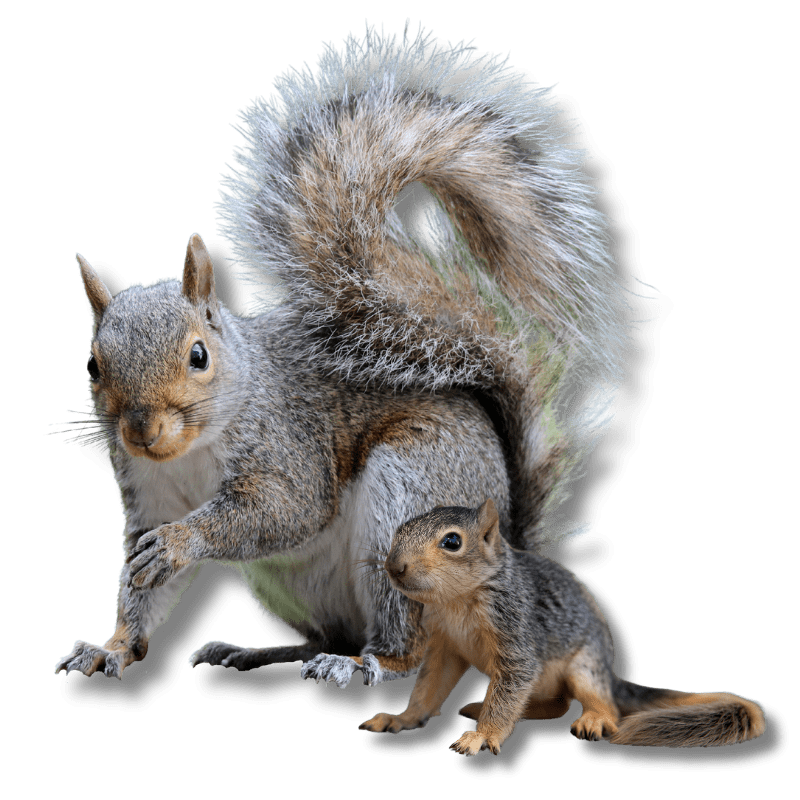
Triangle Wildlife Removal & Pest Control, Inc. provides squirrel removal, exclusion, and damage repair for homes across Cary, North Carolina. We trap and relocate squirrels, seal every entry point on your roofline, and repair the damage they leave behind.
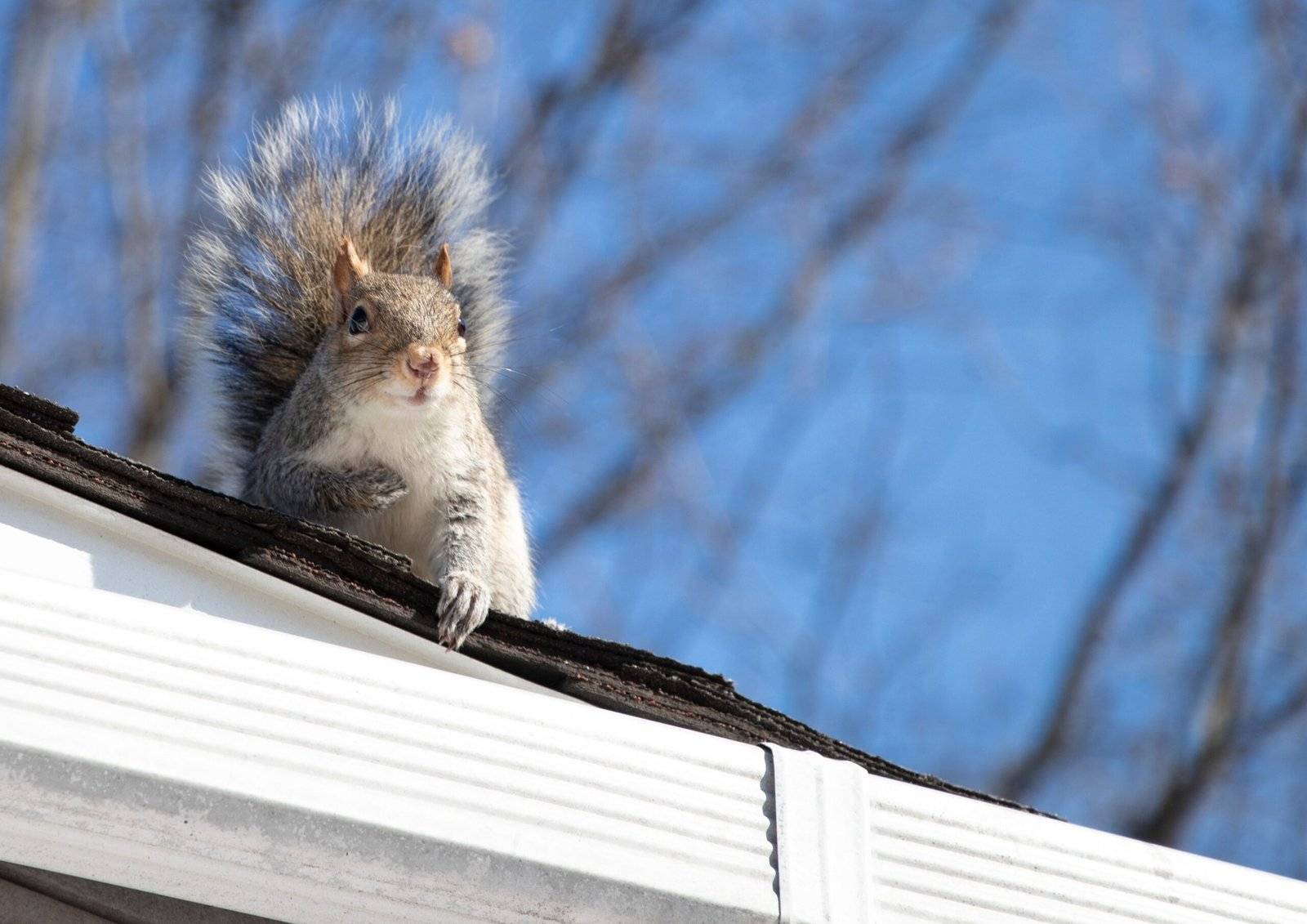
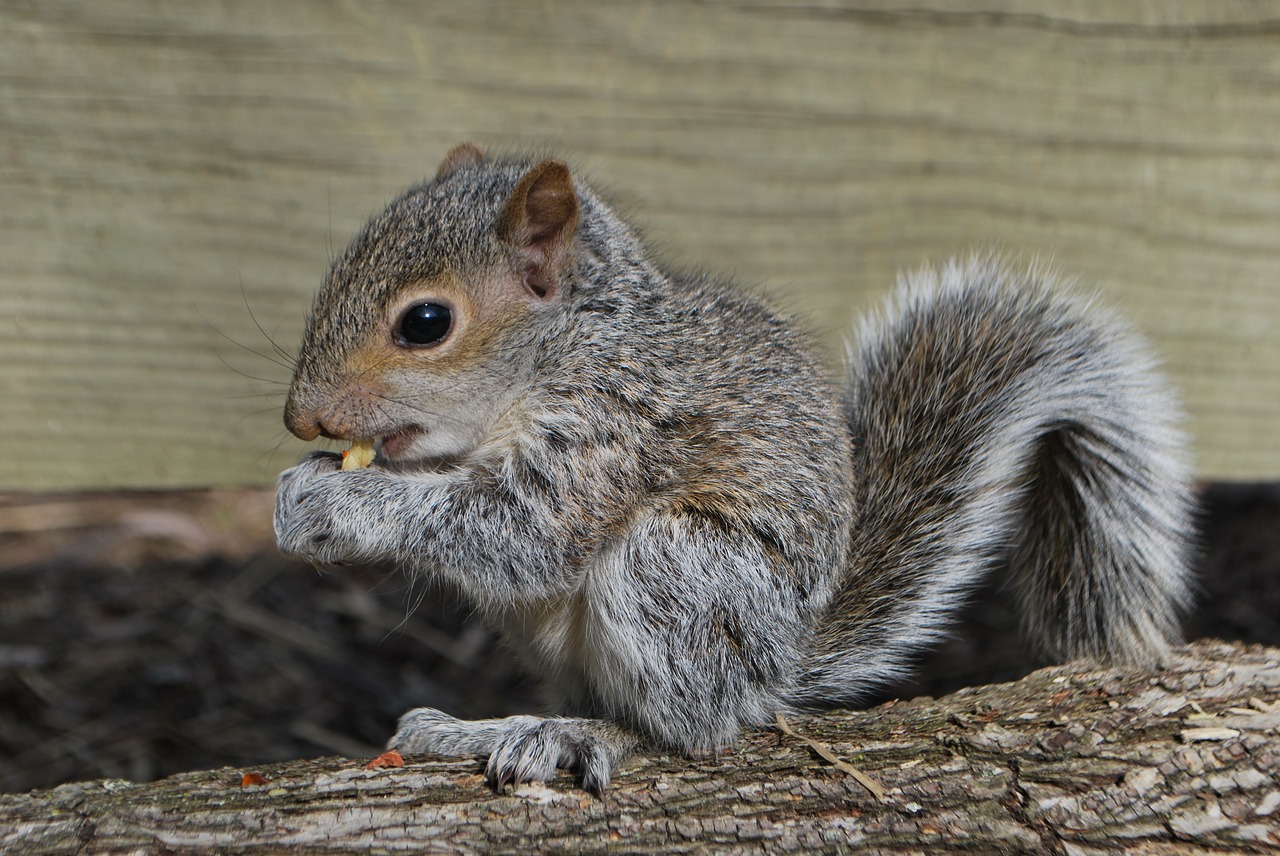
Eastern gray squirrels are the most common attic invader we deal with in Cary. They can fit through a gap as small as 1.5 inches, and once they find a way inside they build nests from shredded insulation, leaves, and bark. A single squirrel can cause thousands of dollars in damage if left unchecked.
Our Cary wildlife removal services cover all of Cary, NC and surrounding Wake County locations. Crabtree Creek originates southwest of Bond Park in Cary and flows northeast through Morrisville and into Raleigh. Swift Creek and White Oak Creek also run through Cary, and the mature conifers and broadleaf trees in older subdivisions like Lochmere give squirrels direct canopy routes to nearby rooflines.
Triangle Wildlife Removal is a licensed and insured wildlife control company carrying $5 million in general liability coverage. We are NWCOA members and the exclusive animal removal provider endorsed by Wildlife Welfare Inc., a 501(c)(3) based in Apex, North Carolina.
Property Damage From Squirrels in Cary
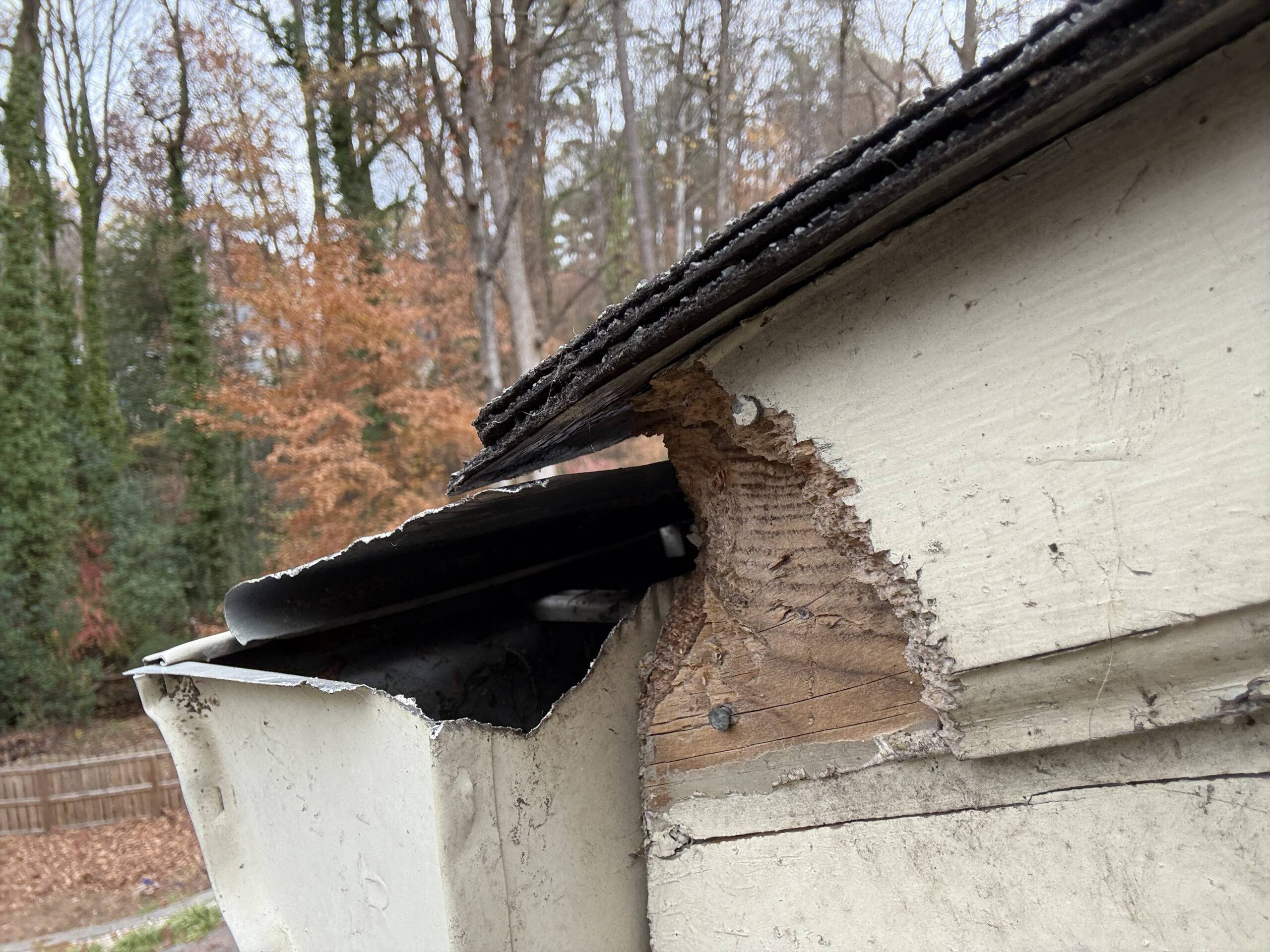
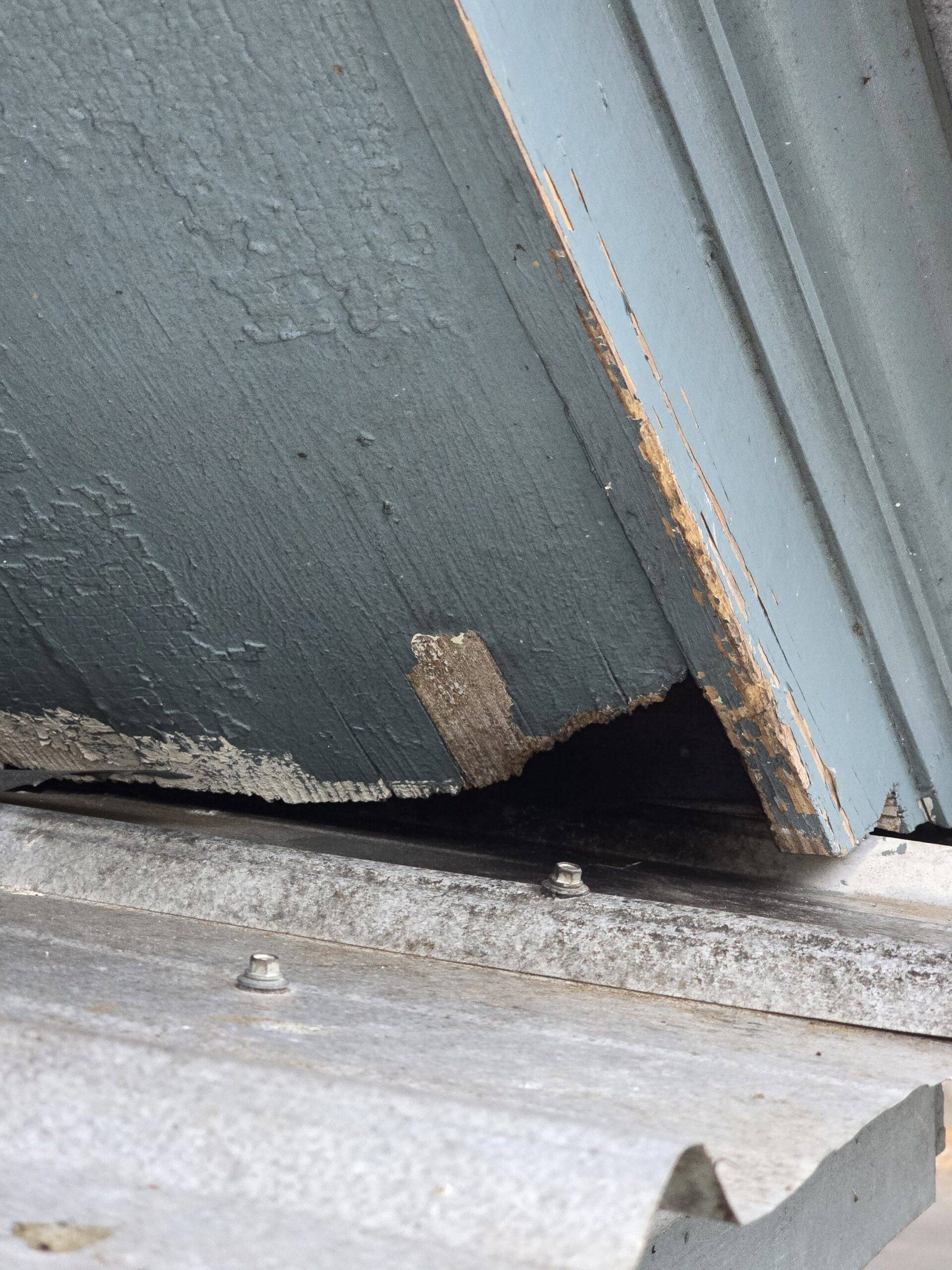
Squirrels chew constantly to keep their teeth from overgrowing. Inside an attic, that means they gnaw on roof decking, rafters, fascia boards, and stored items. The damage accumulates fast because squirrels are active every day of the year and return to the same nesting area morning and evening.
The biggest risk is electrical wiring. Squirrels strip insulation off wiring and leave bare copper exposed against wood framing. This is a documented cause of house fires. The K-State Extension tree squirrel management guide identifies wire damage as one of the most costly and dangerous problems caused by squirrels in attics.
Squirrels also crush and contaminate attic insulation by nesting in it. They pull apart fiberglass batts, compress blown-in insulation with repeated travel paths, and soil the material with urine and droppings. In homes where squirrels have nested for more than one season, we regularly find insulation that has lost most of its R-value and needs full replacement.
Squirrels in Cary, NC
Cary sits in the Piedmont region of North Carolina on the boundary between the Durham Basin and the harder metamorphic rock of the central Piedmont. The town’s drainage basin includes Crabtree Creek, Swift Creek, and Walnut Creek, all tributaries of the Neuse River. Lake Crabtree and Bond Lake add standing water and surrounding hardwood corridors that support a dense squirrel population.
Gray squirrels breed twice a year. The first breeding season runs from January through February, and the second from May through June. Young are born roughly 44 days later. Both cycles drive females to seek out warm, enclosed nesting sites, and attics with easy roofline access are their top choice in neighborhoods like MacGregor Downs where mature trees overhang homes.
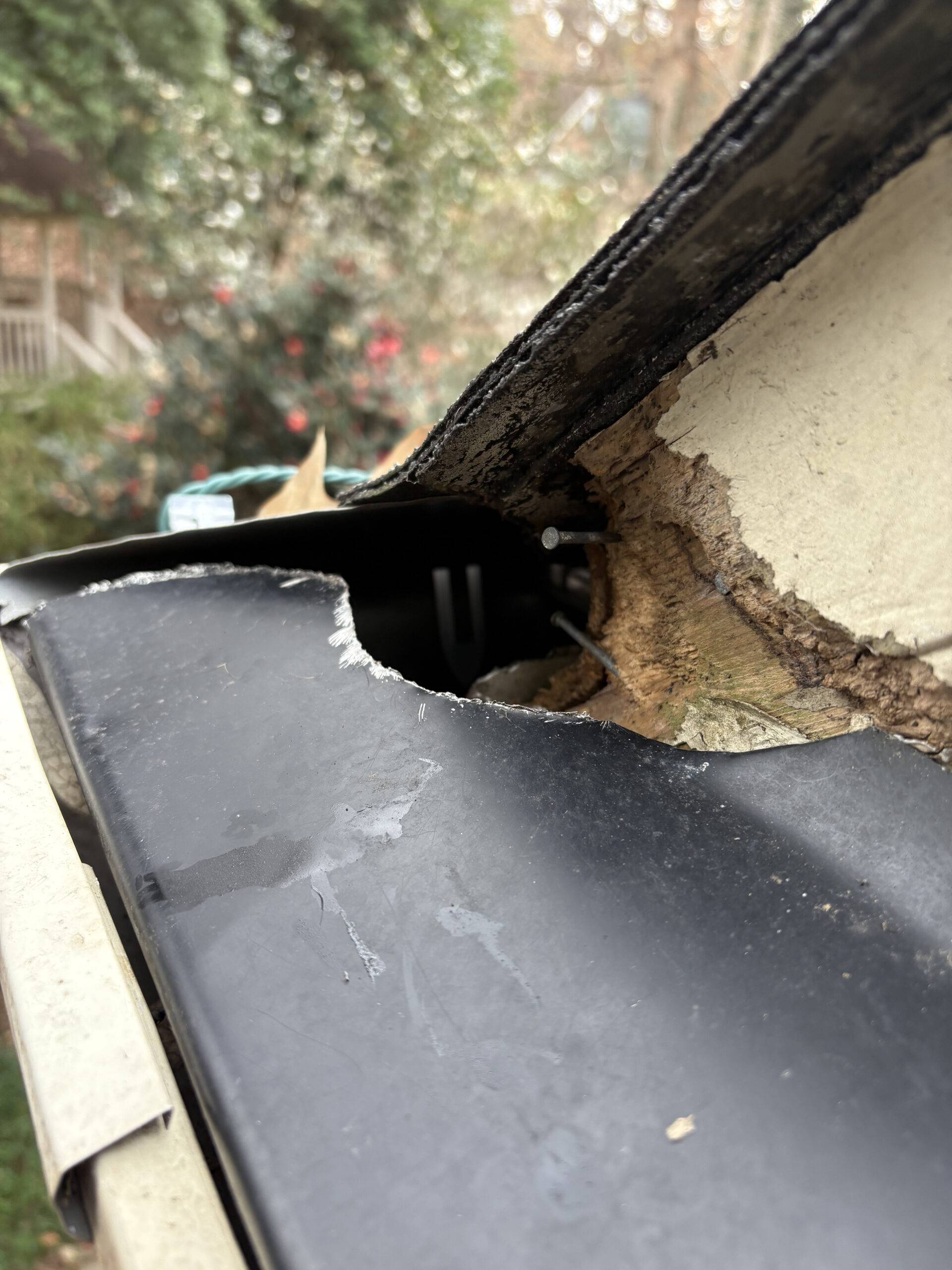
Squirrels exploit construction gaps at soffit-to-fascia joints, roof returns, gable vents, and plumbing or HVAC penetrations. Unlike raccoons, squirrels do not need to force entry. They find existing gaps and enlarge them by chewing until the opening is big enough to pass through. The NC State Extension guide to eastern gray squirrels describes how gray squirrels will chew through wood, aluminum, and plastic to reach a nesting site.
Signs of Squirrels in Your Home
Squirrels produce distinct signs that are easy to identify once you know the pattern.
- Scratching and scurrying during the day. Squirrels are active from sunrise through late afternoon. If you hear fast, light movement in the attic or walls during daylight hours, squirrels are the most likely cause. Rats and flying squirrels make similar sounds but only at night.
- Chewing sounds. Squirrels gnaw on wood, wiring, and plastic. The sound is a steady, rhythmic grinding that can go on for minutes at a time. You may hear it from inside the attic or from the roofline where they are enlarging an entry hole.
- Visible gnaw marks on the roofline. Look for chewed edges on fascia boards, soffit panels, gable vents, and around utility penetrations. Fresh gnaw marks show light-colored wood underneath. These marks are smaller and cleaner than raccoon damage.
- Scattered droppings. Squirrel droppings are small, dark, and oval shaped, similar in size to a grain of rice. Unlike raccoons, squirrels do not use a single latrine site. Droppings are scattered along travel paths and near nesting areas.
- Nesting material in the attic. Squirrels build large nests from shredded insulation, leaves, bark strips, and fabric. The nests are roughly the size of a football and are usually tucked against a wall or rafter where two surfaces meet.
Squirrel Removal and Exclusion
Every Cary, NC squirrel removal job starts with a full inspection of the roofline, soffits, fascia, gable vents, and every other area where a squirrel could enter. Our staff zoologist Derek Cline, with 15 years of field experience, leads these assessments to identify every active and potential access point.
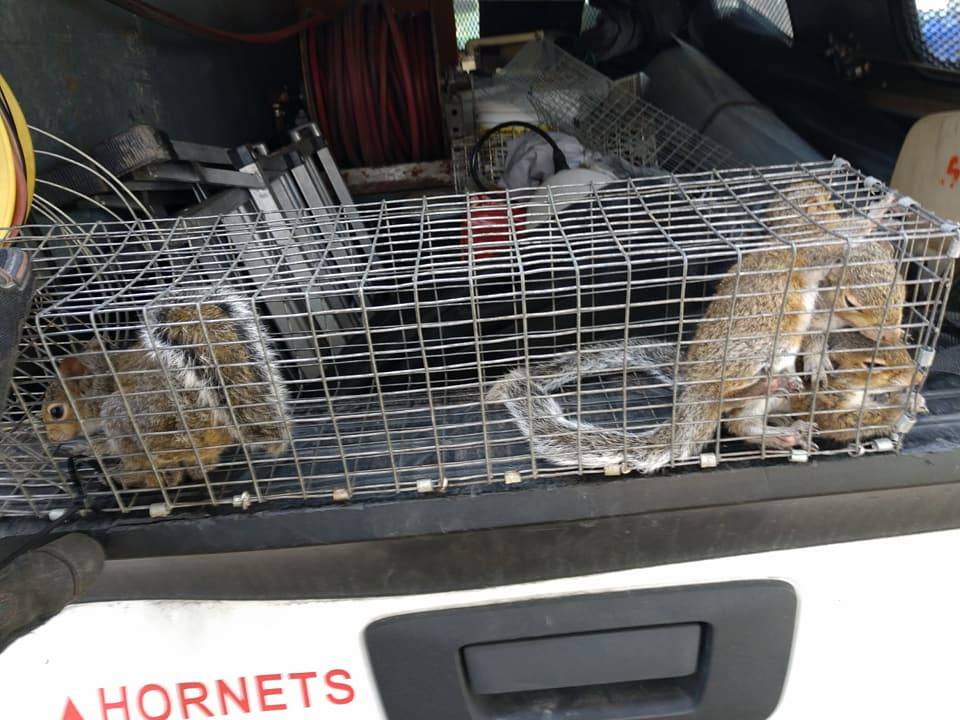
We trap squirrels using live traps placed at active entry points and along identified travel routes on the roof. Gray squirrels can be legally relocated under North Carolina’s WCA permit system, and we move trapped animals to approved release sites away from residential areas. All traps are checked every 24 hours in accordance with state wildlife control regulations.
After the squirrels are out, we seal every entry point with steel, hardware cloth, and metal flashing. Squirrels will chew through wood, aluminum, and plastic, so every repair has to use materials they cannot get through. Our exclusion work carries a limited lifetime warranty.
We also repair the damage squirrels leave behind. That includes replacing chewed fascia boards and soffits, removing contaminated insulation, and installing new insulation where needed. On jobs where squirrels have chewed wiring, we flag the damage for a licensed electrician.
Frequently Asked Questions
How do squirrels get into my attic?
Squirrels enter through construction gaps at soffit-to-fascia joints, roof returns, gable vents, and utility penetrations. They can fit through a hole as small as 1.5 inches and will enlarge any gap by chewing until it is big enough to pass through comfortably.
When are squirrels most active in attics?
Gray squirrels are active during the day, especially in the early morning and late afternoon. Activity peaks during the two breeding seasons, the first in late winter and the second in midsummer, when females are looking for nesting sites.
Can squirrels cause a house fire?
Yes. Squirrels chew the insulation off electrical wiring, leaving bare copper exposed against wood framing. This is a documented cause of attic fires. If we find chewed wiring during a removal job, we flag it for a licensed electrician before the damage becomes a safety hazard.
How long does squirrel removal take?
Most squirrel removal jobs take one to two weeks from the initial inspection through final exclusion. The timeline depends on how many squirrels are present and how many entry points need to be sealed. We do not seal entry points until all squirrels have been removed from the attic.
What other wildlife control services do you offer in Cary, NC?
Triangle Wildlife Removal also provides Cary bat removal, Cary flying squirrel removal, Cary raccoon removal, Cary rodent control, Cary snake removal, Cary bird control, and Cary wildlife exclusion across Cary NC.
Why Homeowners Choose Triangle Wildlife Removal
Triangle Wildlife Removal has handled squirrel removal across the Triangle since Tad Bassett founded the company in 1990. Tad has run it full-time since January 1996 and still answers the phone himself, which is why many squirrel jobs come from repeat customers and their referrals. In an expert interview published by the Regency Park Partnership, a community resource serving more than 244,000 Nextdoor neighbors across the Triangle, Tad explained how squirrels behave through the seasons, what North Carolina regulations require of a wildlife control operator, the attic damage squirrels cause, and the steps homeowners can take to prevent them.
Every technician on the team is Ridge-Guard Certified, Bird Barrier Certified, and trained in the advanced metal fabrication used for squirrel exclusion and damage repair. Triangle Wildlife Removal is the largest installer of Ridge-Guard on the East Coast and has held that position for about five years. Ridge-Guard seals ridge vents, which are one of the common entry points squirrels use to reach an attic. Every squirrel exclusion job carries a limited lifetime warranty on workmanship and materials. If squirrels get back through a sealed entry point, Triangle Wildlife Removal returns and fixes it at no charge.
Our Cary Service Areas
We service the entire Triangle area of North Carolina
We offer squirrel removal services to homes in Cary, NC and the neighborhoods and communities of Northwoods, Preston, Amberly, MacGregor Downs, Lochmere, Cary Park, Carpenter Village, Twin Lakes, Weldon Ridge, Green Level, Stonewater, and Highcroft. Our coverage runs throughout Cary along both sides of Cary Parkway, from the Preston and MacGregor Downs areas near US-1 out to the West Cary communities off Green Level Road and Davis Drive.
Our Industry Credentials
Triangle Wildlife Removal operates under NC Wildlife Control Agent Permit #DCA25000312, verifiable through the NC Wildlife Resources Commission WCA directory, and NC Pest Control License #1778 PW, verifiable through the NC Department of Agriculture license search. The company is an active member of the National Wildlife Control Operators Association and holds NWCOA Bat Standards Certification, the wildlife control industry's professional standard for bat exclusion work. All technicians are Ridge-Guard Certified Installers and Bird Barrier Certified, with additional certification in advanced metal fabrication for wildlife exclusion and structural damage repairs.
Homeowners can read field-level reviews of our Raleigh wildlife removal work on Yelp. Every employee passes a background check before hiring, with annual criminal and sexual predator screenings standard across the company.


Customer Testimonials


John T.
Vickie B.
Stephanie B



Triangle Wildlife Removal received an average rating of 4.7 out of 5 stars

based on 199+ reviews.
Ready For FastSafeReliable Squirrel Control?
You do not have to live with squirrels in your attic. Triangle Wildlife Removal offers same-day and 24/7 emergency service across the Triangle with a limited lifetime warranty on all exclusion work.
4.8 stars across 400+ reviews | NWCOA Bat Standards Certified | Guaranteed Wildlife Exclusion