
Serving The Triangle Area Since 1990!
Chapel Hill Raccoon Removal
Triangle Wildlife Removal & Pest Control, Inc. has provided Chapel Hill raccoon removal for homes and businesses since 1990. The company is owned and operated by Tad Bassett, who holds a B.S. in Fisheries and Wildlife Management from NC State University and a NC Wildlife Control Agent Permit #DCA25000312. Our team includes licensed wildlife control operators, a staff zoologist, and field technicians with decades of hands-on raccoon trapping, removal, and exclusion experience in the Triangle area of North Carolina. We maintain a 4.7+ rating across 400+ online reviews including 199+ Google reviews, a 4.9 star Angi rating, 150+ Nextdoor Favs, and a BBB A+ rating with zero complaints.
Every raccoon exclusion job comes with a limited lifetime warranty on workmanship and materials. If raccoons return to a sealed entry point, we come back to fix it.
Triangle Wildlife Removal & Pest Control, Inc.
1913 Lost Cove Ln, Raleigh, NC 27603
Phone: (919) 661-0722
Hours: Monday - Sunday, 7:00 AM - 5:00 PM | 24/7 Emergency Service
NC WCA Permit #DCA25000312 | NC Pest Control License #1778 PW
Schedule An Inspection!
Click To Contact
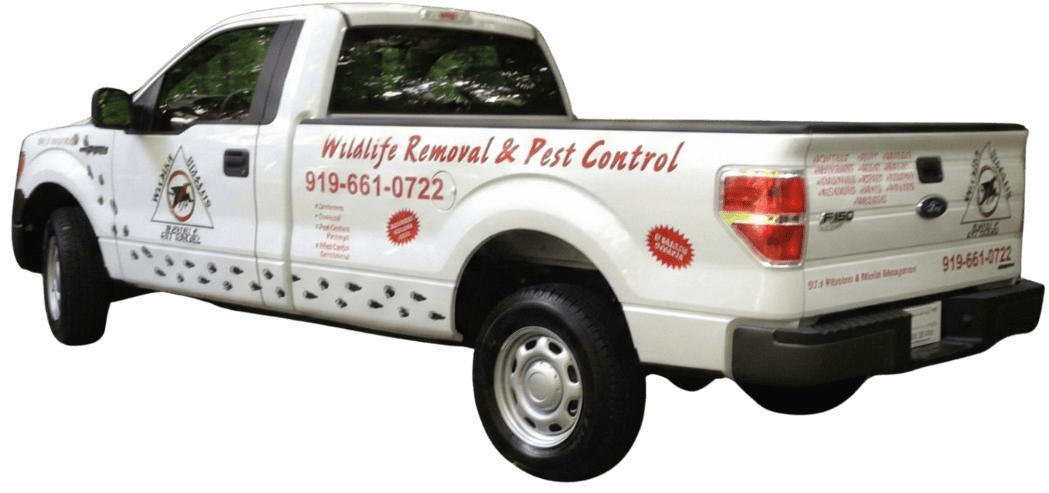
Our Raccoon Removal Services in Chapel Hill, NC
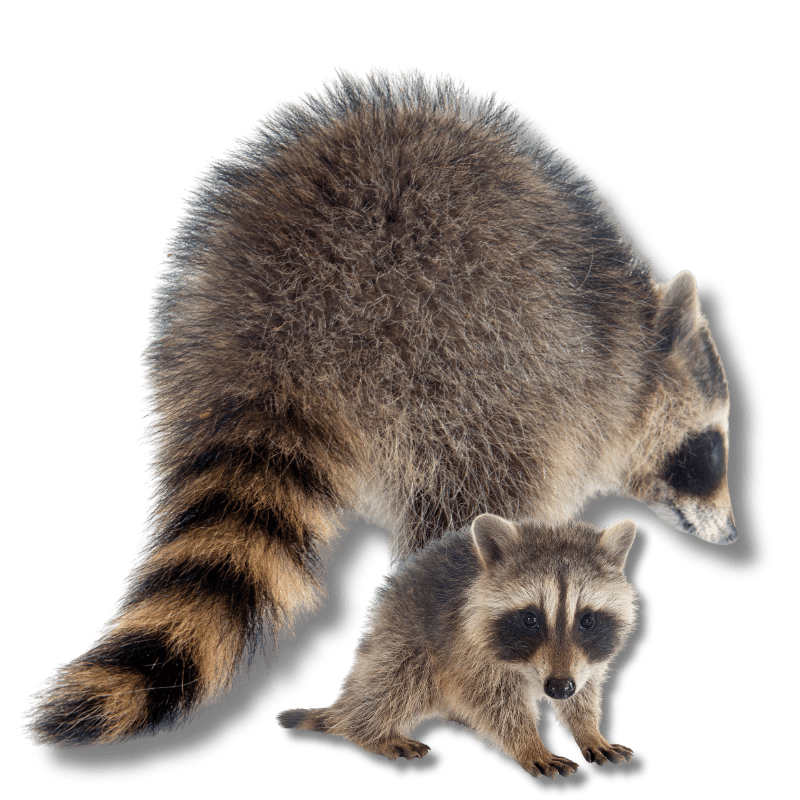
Triangle Wildlife Removal & Pest Control, Inc. provides raccoon removal, exclusion, and damage repair for homes across Chapel Hill, North Carolina. We inspect your property, trap and remove raccoons, seal every entry point, and repair the damage they leave behind.
Raccoons cause more physical damage to a home than almost any other nuisance wildlife species we deal with. They are strong enough to rip open soffits, tear off roof vents, and peel back shingles to get into an attic. Once inside, they crush insulation, contaminate the space with feces that carry serious disease risks, and create damage that only gets worse the longer they stay.
Our Chapel Hill wildlife removal services cover all of the Chapel Hill, NC area and surrounding Orange County locations. Bolin Creek flows through the center of Chapel Hill and is the town’s oldest and most popular greenway corridor. Morgan Creek runs along the southern edge of town before feeding into Jordan Lake. Both creeks give raccoons constant water access and wooded travel paths into neighborhoods like Governors Club.
Triangle Wildlife Removal is a licensed and insured wildlife control company carrying $5 million in general liability coverage. We are NWCOA members and the exclusive animal removal provider endorsed by Wildlife Welfare Inc., a 501(c)(3) based in Apex, North Carolina.
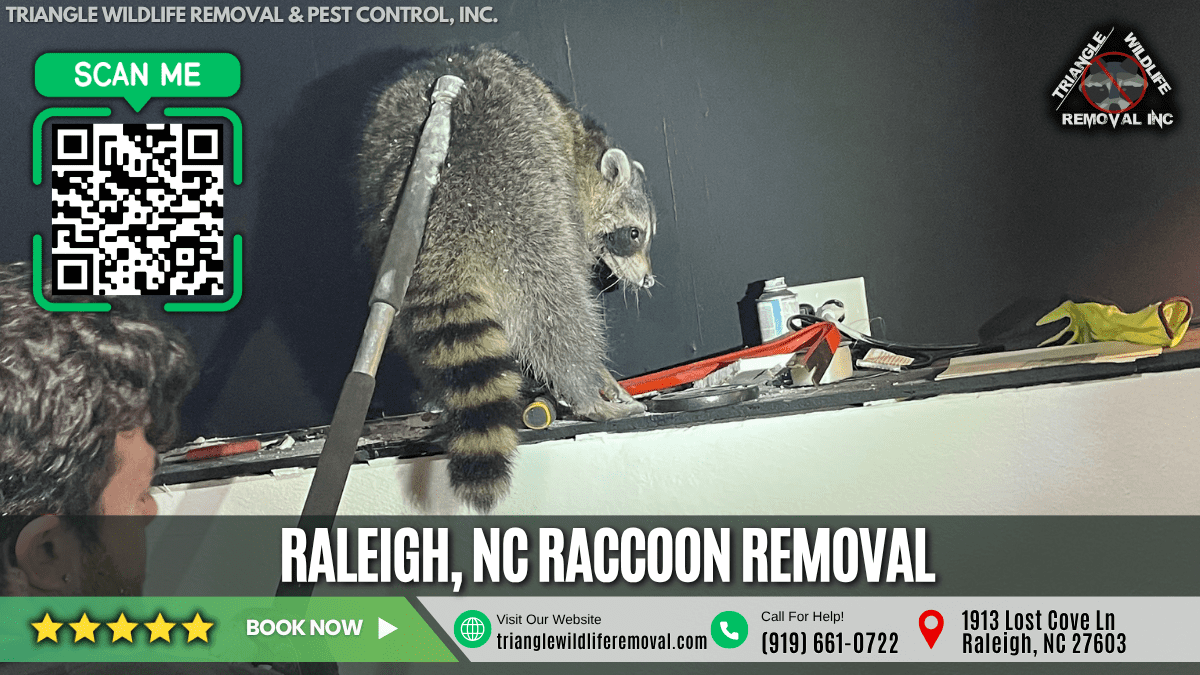
Health and Property Risks From Raccoons in Chapel Hill
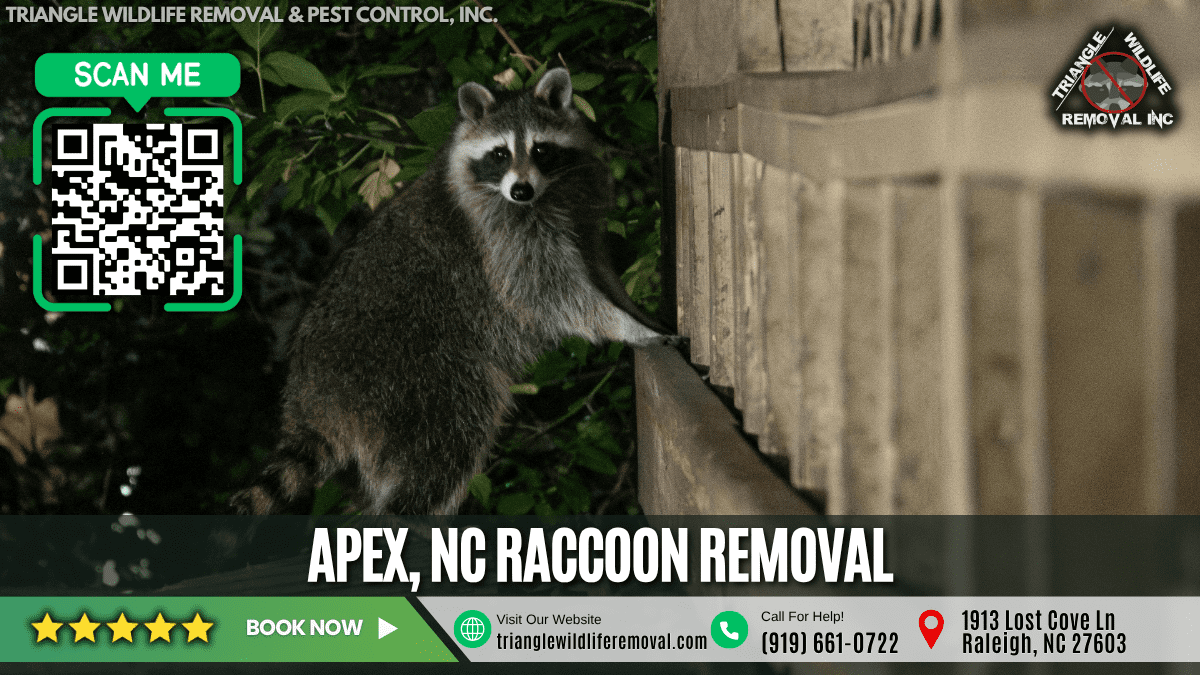
Raccoon feces carry Baylisascaris procyonis, a roundworm whose eggs can survive in soil and insulation for years. Exposure happens when someone disturbs contaminated material and accidentally ingests or inhales the microscopic eggs. In rare cases, Baylisascaris causes severe neurological damage, particularly in children. The CDC overview of Baylisascaris raccoon roundworm details the exposure risks and why professional cleanup matters.
Raccoons are also a primary rabies vector species in the eastern United States. North Carolina classifies them alongside foxes and skunks as animals that carry and transmit rabies at rates high enough to affect public health policy. This classification is the reason state law prohibits relocating trapped raccoons.
The property damage is substantial. Raccoons weigh 15 to 30 pounds and have the hand strength to peel aluminum soffits, tear through rotted fascia, and pull vent covers off their mounts. Inside the attic, they flatten insulation by walking and sleeping on it, shred ductwork, and establish latrine sites where feces pile up in concentrated areas. We regularly find attics where a single raccoon caused thousands of dollars in damage over just a few weeks.
Raccoons in Chapel Hill, NC
Raccoons are nocturnal, highly adaptable, and completely comfortable living alongside people. Chapel Hill’s mix of old hardwood canopy, university campus landscaping, and creek-fed greenway corridors gives them everything they need: water, food from trash cans and pet bowls, and shelter in attics and crawlspaces. Jordan Lake sits just to the southwest, adding a large reservoir and surrounding forest that sustain a dense raccoon population across the area.
Female raccoons seek out enclosed, elevated spaces to give birth. Attics are their first choice. Breeding typically happens between January and March, with kits born in April or May. A mother raccoon with babies in your attic will defend that den aggressively, and she will cause significant damage getting in and out. The CDC rabies prevention guidance explains why raccoons should never be approached or handled without proper training and equipment.
Raccoons are strong enough to force open construction gaps that other animals cannot. They can lift loose soffit panels, pull apart deteriorated fascia boards, and tear through roof-to-wall flashing. A gap that starts at two inches can become a fist-sized hole in a single night. Once a raccoon establishes an entry point, other raccoons in the area will find it too.
Signs of Raccoons in Your Home
Raccoons produce obvious signs that are hard to miss once you know what to listen and look for.
- Heavy thumping and walking at night. Raccoons are much larger than squirrels or rats. The sound of a raccoon moving through an attic is a slow, heavy thud, not the quick scurrying you hear from smaller animals. Homeowners often describe it as someone walking in the attic.
- Vocal sounds. Raccoons chitter, growl, and make a distinctive purring sound. During baby season, you may hear high-pitched crying from kits, especially during the day when the mother is out foraging.
- Large droppings in concentrated areas. Raccoons use latrine sites, meaning they return to the same spot repeatedly. The droppings are larger than a dog’s and often contain visible seeds or berry fragments. Latrine sites are a serious health hazard because of Baylisascaris.
- Visible damage at the roofline. Torn soffits, bent or missing vent covers, ripped shingles, and damaged fascia boards are all common raccoon entry signs. The damage is usually obvious from the ground.
- Strong odor. Raccoon urine and feces produce a heavy, unmistakable smell. If the smell is concentrated in one area of your ceiling, there is likely a latrine site directly above it in the attic.
Raccoon Removal and Exclusion
Every Chapel Hill, NC raccoon removal job starts with a full inspection of the roofline, soffits, fascia, gable vents, chimney, and any area where a raccoon could force entry. Our staff zoologist Derek Cline, with 15 years of field experience, leads these assessments to identify every active and potential access point.
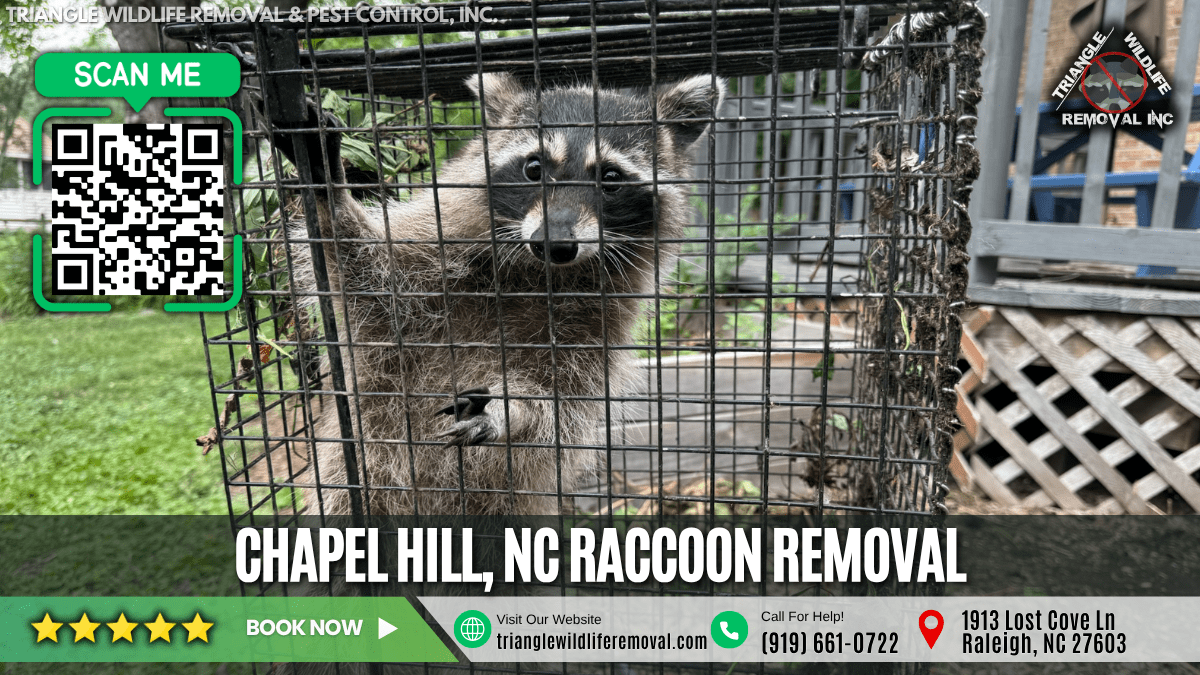
We trap raccoons using live traps placed at active entry points and along identified travel routes. North Carolina prohibits the relocation of raccoons year-round because they are classified as a rabies vector species. All traps are checked every 24 hours in accordance with state wildlife control regulations. Removal is conducted humanely and in full compliance with North Carolina law.
After the raccoons are out, we seal every entry point with steel, hardware cloth, and metal flashing. Raccoons are persistent and will test previous entry points, so every seal has to hold against an animal that can pull, pry, and chew. Our exclusion work carries a limited lifetime warranty.
Cleanup is a critical part of raccoon jobs. We remove contaminated insulation, sanitize latrine sites and affected surfaces, and install new insulation where needed. Raccoon feces require careful handling because of the Baylisascaris risk, and our technicians use proper protective equipment throughout the process.
Frequently Asked Questions
How do raccoons get into my attic?
Raccoons are strong enough to force open weak points on your roof that other animals cannot. They tear open deteriorated soffits, pull off vent covers, and peel back flashing at roof intersections. Any gap or soft spot on your roofline is a potential entry point for a raccoon.
Can raccoons be relocated in North Carolina?
No. North Carolina classifies raccoons as a rabies vector species, and state regulations prohibit relocating them. Trapped raccoons must be handled in accordance with NC Wildlife Resources Commission guidelines. Our wildlife control operators follow all state requirements on every job.
How long does raccoon removal take?
Most raccoon removal jobs take one to two weeks from the initial inspection through final exclusion. The trapping phase depends on how many raccoons are involved and whether babies are present. During baby season, we check for kits before sealing any entry point.
Is raccoon feces dangerous?
Yes. Raccoon droppings can contain Baylisascaris roundworm eggs, which survive in the environment for years and can cause serious illness if accidentally ingested or inhaled. Do not attempt to clean up raccoon feces or a raccoon latrine site yourself. Professional pest control cleanup with proper protective equipment is the safe approach.
What other wildlife control services do you offer in Chapel Hill, NC?
Triangle Wildlife Removal also provides Chapel Hill bat removal, Chapel Hill flying squirrel removal, Chapel Hill squirrel removal, Chapel Hill rodent control, Chapel Hill snake removal, Chapel Hill bird control, and Chapel Hill wildlife exclusion across Chapel Hill NC.
Our Wildlife Removal Services
Triangle Wildlife Removal handles every step from inspection through removal, exclusion, damage repair, and attic restoration. Below are the most common wildlife problems we solve in Raleigh homes.
Bat Removal
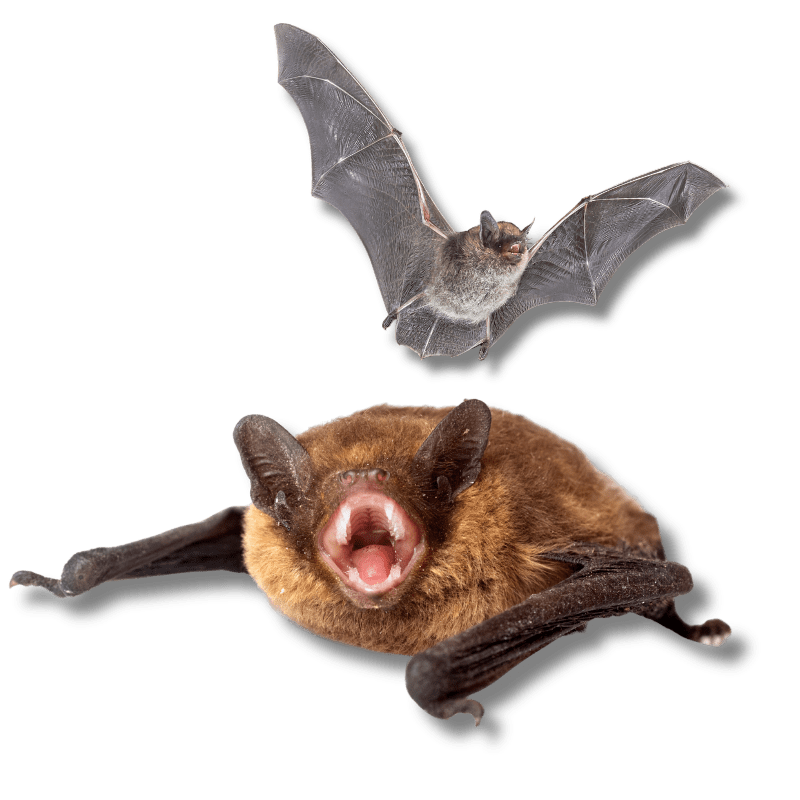
Bats in your attic create health hazards from guano buildup and carry rabies risk. We perform full exclusion using one-way doors during the legal window of August through April, then seal every entry point on the structure.
Flying Squirrel Removal
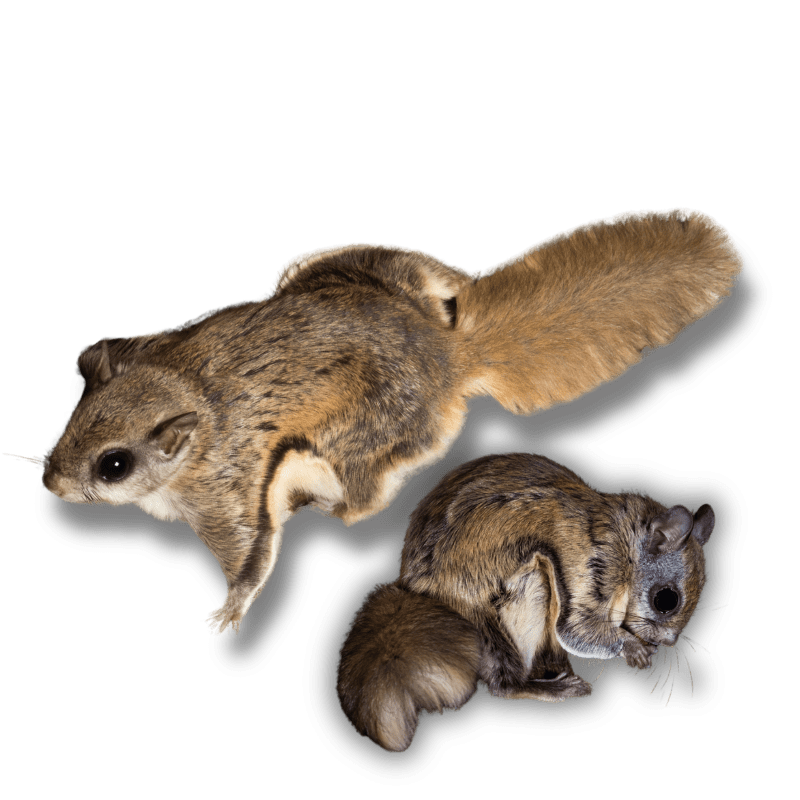
Flying squirrels enter attics through gaps as small as a quarter and are most active at night during cold months. We trap, remove, and seal every construction gap at the roofline to keep them out permanently.
Squirrel Removal
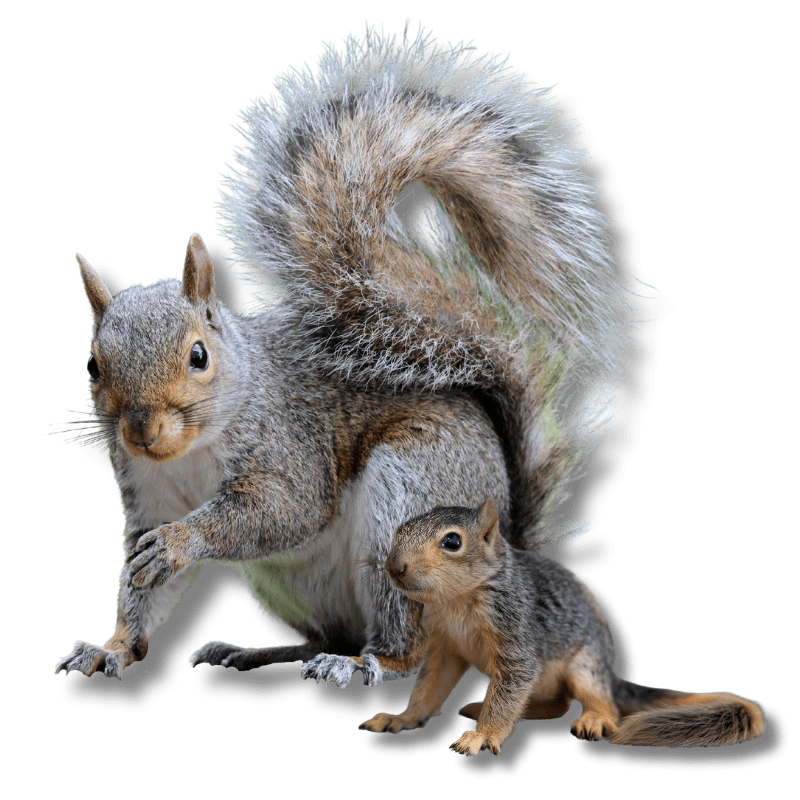
Gray squirrels chew through fascia, soffits, and wiring to nest in attics, creating fire hazards and structural damage. We remove active squirrels with live traps and exclude them by sealing every entry point on the structure.
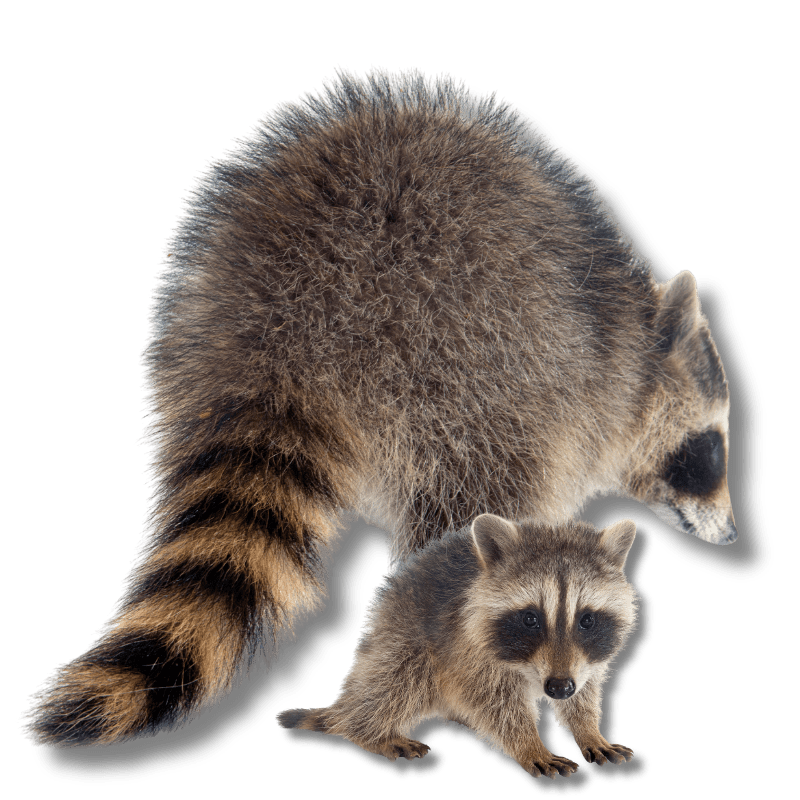
Raccoon Removal
Raccoons tear open soffits, rip through roof decking, and contaminate attic insulation with feces carrying raccoon roundworm. We trap and remove raccoons humanely, repair the damage they caused, and seal the structure to prevent re-entry.
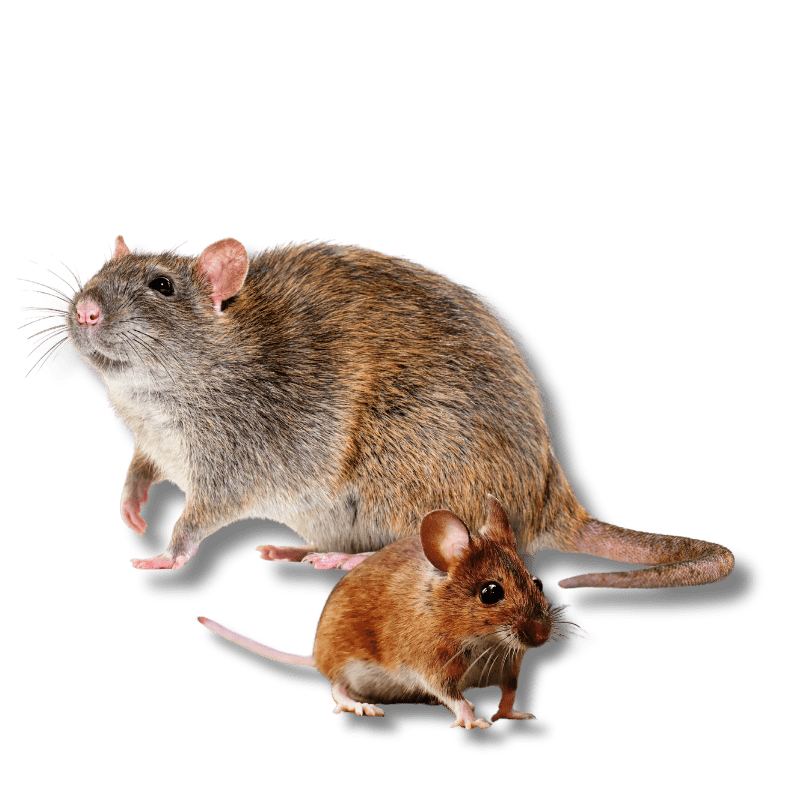
Rodent Control
Rats and mice enter through pipe chases, A/C line penetrations, and foundation vents, contaminating insulation and chewing wiring. We trap and remove active rodents inside the structure and seal every exterior entry point to stop the cycle.
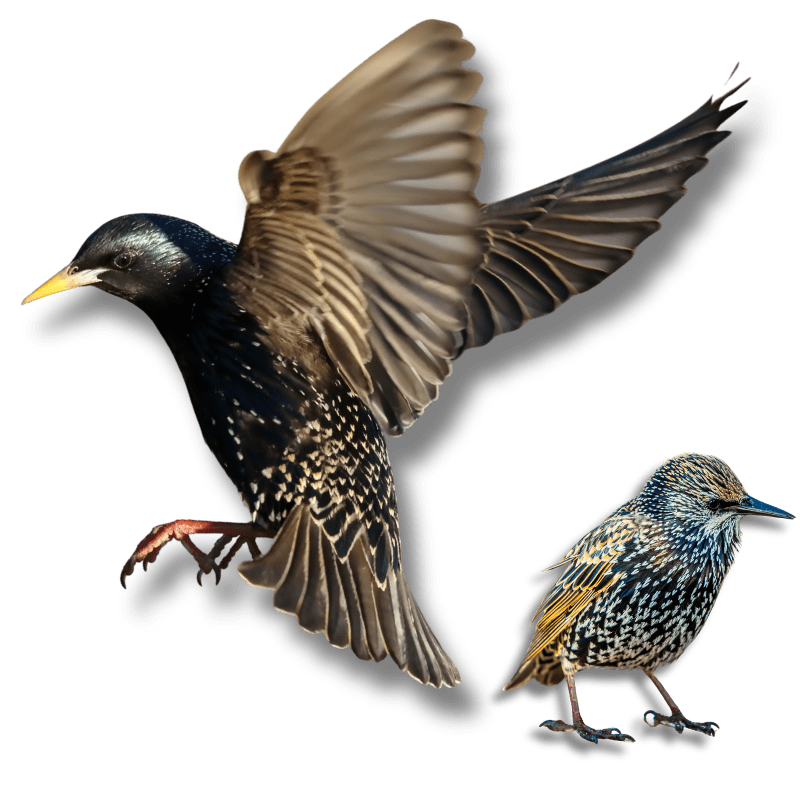
Bird Control
European starlings and house sparrows nest inside exhaust vents, dryer vents, and attic spaces, blocking airflow and creating fire hazards. We remove nesting material, install bird-proof vent covers, and clean contaminated ductwork.
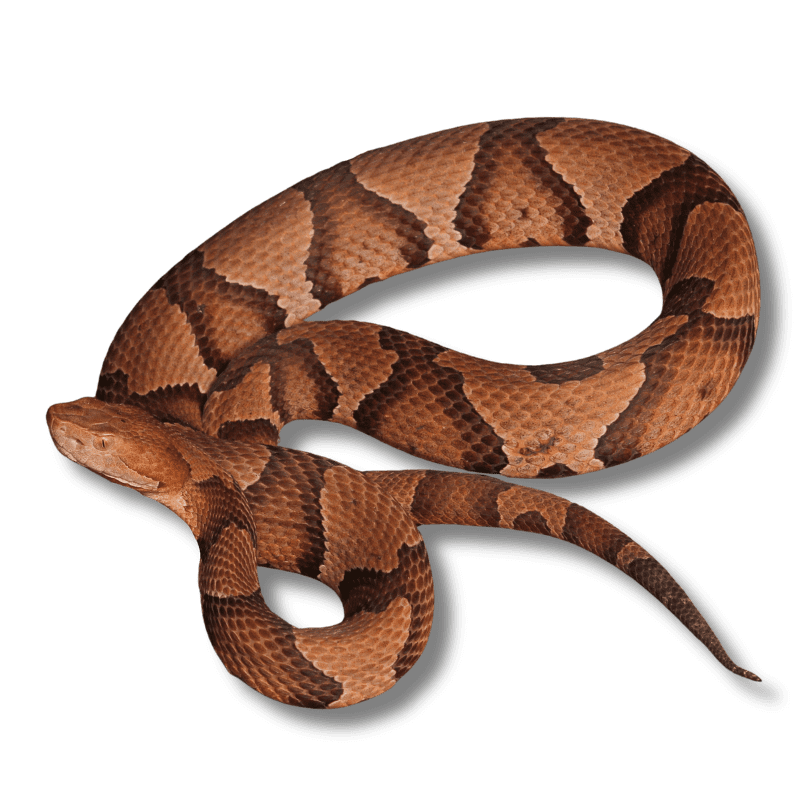
Snake Removal
Snakes enter crawlspaces, garages, and basements through foundation gaps and pipe penetrations. We safely remove the snake, identify the species, and seal entry points to keep them from coming back.
Wildlife Exclusion
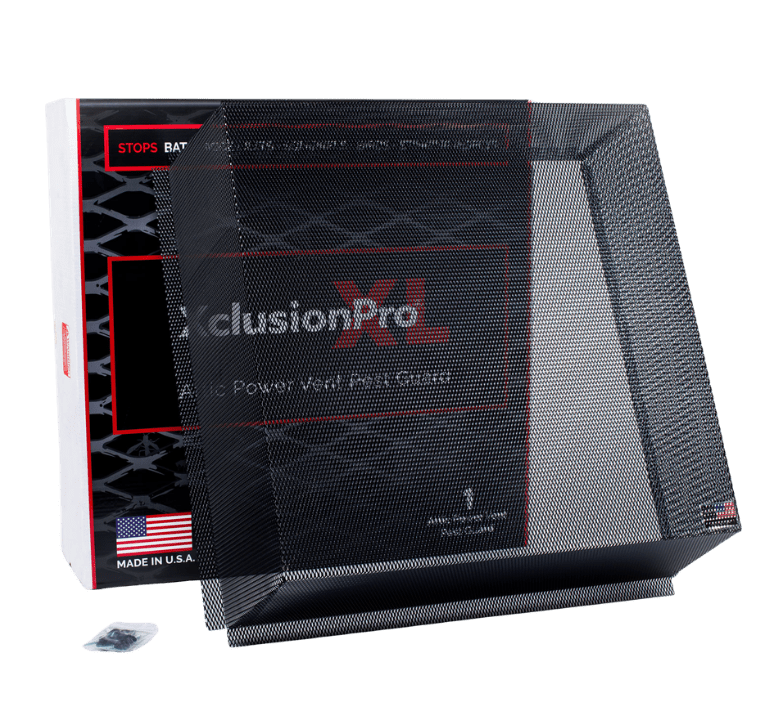
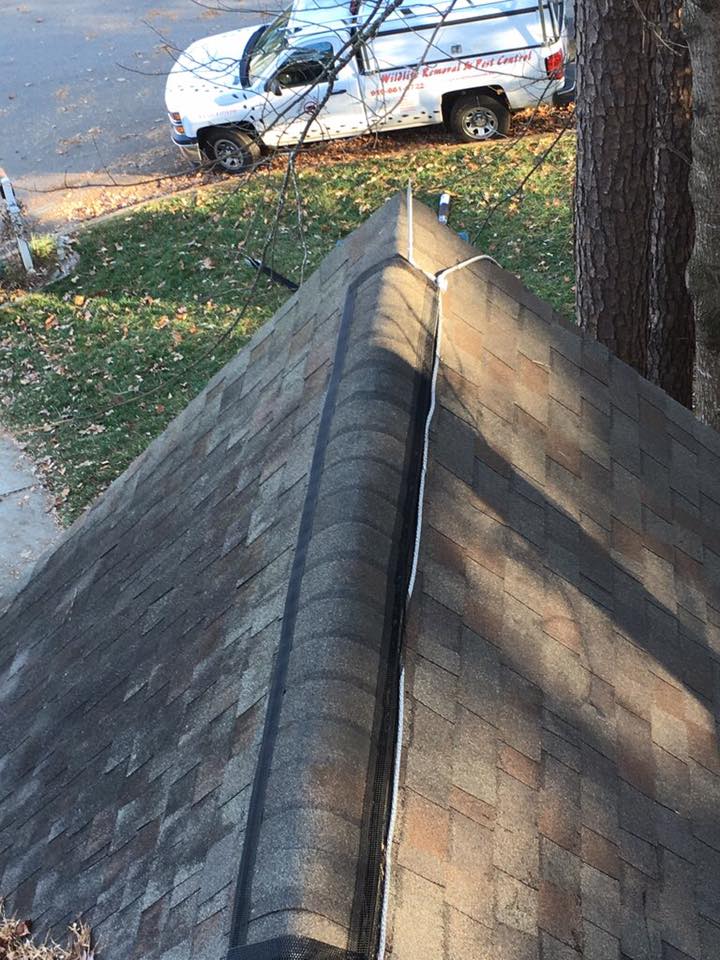
Wildlife exclusion seals every vulnerable opening on your home to prevent animals from getting in. We inspect the full structure, identify active entries and potential weak points, and install commercial-grade barriers backed by a limited lifetime warranty.
Why Homeowners Choose Triangle Wildlife Removal
Triangle Wildlife Removal has handled raccoon removal across the Triangle since Tad Bassett founded the company in 1990. Tad has run it full-time since January 1996 and still answers the phone himself, which is why many raccoon jobs come from repeat customers and their referrals. In an expert interview published by the Regency Park Partnership, a community resource serving more than 244,000 Nextdoor neighbors across the Triangle, Tad explained how raccoons behave through the seasons, what North Carolina regulations require of a wildlife control operator, the attic and crawlspace damage raccoons cause, and the steps homeowners can take to prevent them.
Every technician on the team is licensed and trained in the trapping, exclusion, and damage repair work that raccoon jobs require. Raccoons are strong enough to tear open soffits, pull back roof edges, and rip through gable vents and roof returns to reach an attic, and a female will work hard to get inside to den and raise a litter. Triangle Wildlife Removal seals those entry points with materials built to hold up to that strength, and removes the animals on site rather than leaving a homeowner to deal with a raccoon already in the house. Every raccoon exclusion job carries a limited lifetime warranty on workmanship and materials. If a raccoon gets back through a sealed entry point, Triangle Wildlife Removal returns and fixes it at no charge.
Our Chapel Hill Service Areas
We service the entire Triangle area of North Carolina
We offer raccoon removal services to homes in Chapel Hill, NC and the neighborhoods and communities of Glen Lennox, Coker Hills, Kings Mill-Morgan Creek, Gimghoul, Westwood, Ironwoods, Briar Chapel, Governors Club, Southern Village, Meadowmont, The Oaks, and Lake Hogan Farms. We work across town, from the Bolin Creek and Carolina North Forest areas off Martin Luther King Jr. Boulevard to the Lake Hogan Farms and Winmore communities near Weaver Dairy Road.
Our Industry Credentials
Triangle Wildlife Removal operates under NC Wildlife Control Agent Permit #DCA25000312, verifiable through the NC Wildlife Resources Commission WCA directory, and NC Pest Control License #1778 PW, verifiable through the NC Department of Agriculture license search. The company is an active member of the National Wildlife Control Operators Association and holds NWCOA Bat Standards Certification, the wildlife control industry's professional standard for bat exclusion work. All technicians are Ridge-Guard Certified Installers and Bird Barrier Certified, with additional certification in advanced metal fabrication for wildlife exclusion and structural damage repairs.
Homeowners can read field-level reviews of our Raleigh wildlife removal work on Yelp. Every employee passes a background check before hiring, with annual criminal and sexual predator screenings standard across the company.
Customer Testimonials


John T.
Vickie B.
Stephanie B


Triangle Wildlife Removal received an average rating of 4.7 out of 5 stars

based on 199+ reviews.
Ready For FastSafeReliable Raccoon Removal?
You do not have to live with raccoons in your home. Triangle Wildlife Removal offers same-day and 24/7 emergency service across the Triangle with a limited lifetime warranty on all exclusion work.
4.8 stars across 400+ reviews | NWCOA Bat Standards Certified | Guaranteed Wildlife Exclusion